-
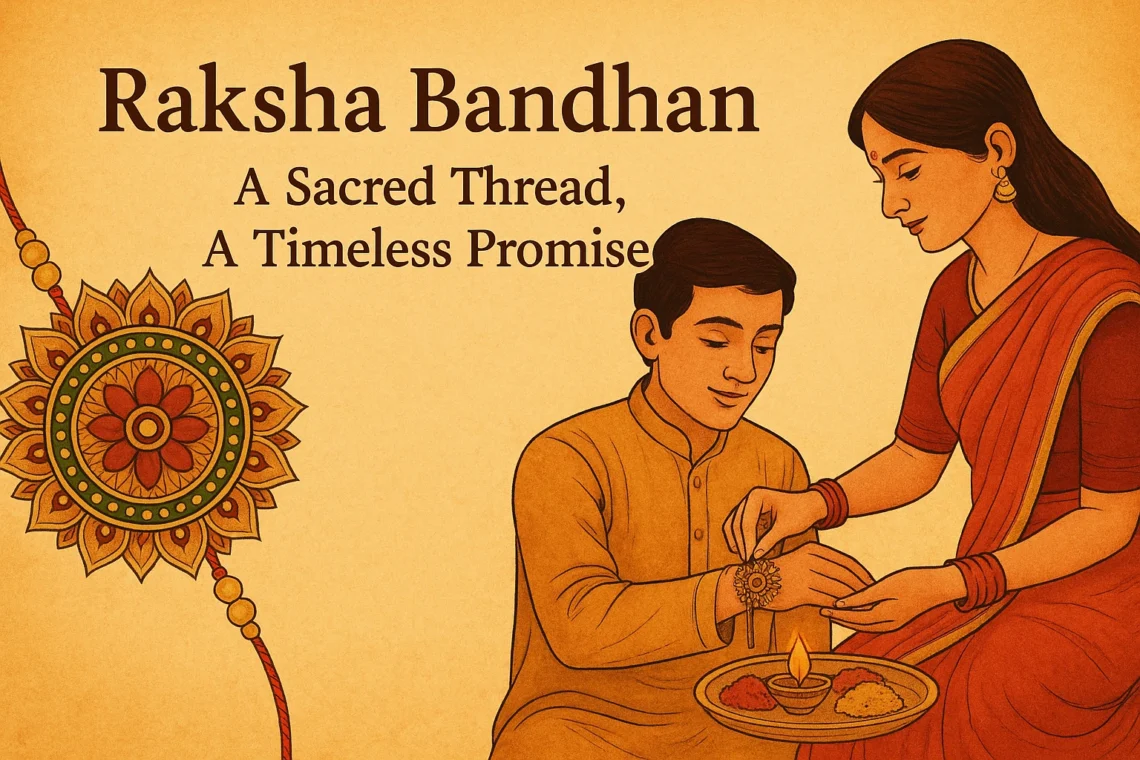
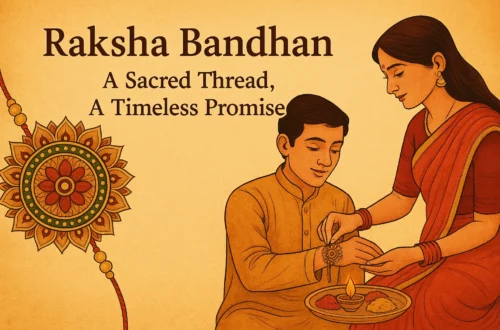
Raksha Bandhan: A Sacred Thread, A Timeless Promise
Raksha Bandhan is not just a festival — it is a celebration of sacred relationships, unwavering trust, and heartfelt promises. Observed on the Shravana Purnima (full moon day of the Shravana month), this occasion is a living example of the Sanatan Dharma principle that love and duty walk hand in hand. On this day, a simple cotton or silk thread — the rakhi — becomes more than an ornament. It becomes a vow. It carries prayers for protection, blessings for prosperity, and a silent promise that the bond it seals will last a lifetime. A Morning Filled with Love The day begins with joy and devotion. Sisters prepare a beautifully…
-
Hinduism: Eternal Wisdom for a Harmonious and Evolved Society
Introduction: More than a Religion Hinduism is not merely a religion. It is a civilizational framework, a spiritual philosophy, and a way of living that has evolved over thousands of years. Often called Sanātana Dharma (Eternal Duty), Hinduism has never claimed to be the only truth. Rather, it has always been a vast ocean of knowledge — embracing diversity, honoring the sacredness of all life, and guiding individuals toward self-realization. As the world today grapples with identity crises, ecological disaster, mental health issues, and religious intolerance, Hinduism offers profound answers rooted in harmony, balance, and freedom of thought. 🌿 Core Foundations of Hinduism: A Tapestry of Eternal Wisdom Hinduism, unlike many organized religions, doesn’t have a single…
-
The Eternal Trinity of Hinduism : Brahma, Vishnu, Mahesh
Hinduism, also known as Sanatana Dharma (the Eternal Path), offers a profound vision of the universe and its divine principles. At the heart of this cosmic framework lies the concept of the Trimurti—the divine trinity of Brahma, Vishnu, and Mahesh (Shiva). These three aspects are not separate gods competing for power, but complementary forces that sustain the rhythm of creation, preservation, and destruction in the cosmos. 1. Brahma – The Creator (Sṛṣṭi-Kartā) Brahma symbolizes the creative principle of the universe. He is believed to have emerged from the cosmic energy to give form and structure to existence. Though less commonly worshipped in temples compared to Vishnu and Shiva, Brahma remains…