The Cosmic Triad of Sanatan Dharma
At the heart of Hindu philosophy lies the concept of the Trimurti — three supreme deities who together govern the cosmic cycle of creation, preservation, and destruction. This trinity represents the fundamental forces that sustain the universe.
Brahma — The Creator
Lord Brahma is the creator of the universe and all living beings. He is traditionally depicted with four faces, each facing a cardinal direction, symbolizing his omniscient awareness of all creation.
- Role: Creation of the universe, beings, and knowledge
- Consort: Goddess Saraswati, the deity of learning and arts
- Depiction: Four heads, four arms holding the Vedas, a rosary, a water pot, and a lotus
- Vehicle (Vahana): The swan (Hamsa), symbolizing discernment between good and evil
Brahma's creative energy is described in the Vedas as the source from which all of existence emerged — from the cosmic golden egg (Hiranyagarbha) to the diversity of life we see today.
Vishnu — The Preserver
Lord Vishnu is the sustainer and protector of the universe. When dharma (righteousness) declines, Vishnu incarnates on Earth to restore cosmic order.
- Role: Preservation of the universe and protection of dharma
- Consort: Goddess Lakshmi, the deity of wealth and prosperity
- Depiction: Four arms holding the Sudarshana Chakra, conch shell, mace, and lotus
- Vehicle (Vahana): Garuda, the divine eagle
Vishnu is known for his Dashavatara — ten principal avatars that include Rama and Krishna, who descended to Earth during times of great moral crisis.
Mahesh (Shiva) — The Destroyer and Transformer
Lord Shiva, also known as Mahesh or Mahadeva, is both the destroyer and the regenerator. His destruction is not mere annihilation — it is the dissolution that makes way for new creation.
- Role: Destruction of evil and transformation through dissolution
- Consort: Goddess Parvati (also manifested as Durga and Kali)
- Depiction: The third eye, crescent moon, the river Ganga flowing from his hair, the serpent Vasuki around his neck
- Vehicle (Vahana): Nandi, the sacred bull
Shiva represents the ascetic ideal and the householder simultaneously. He is Nataraja — the cosmic dancer whose Tandava dance represents the rhythm of creation and destruction.
The Unity of the Three
While the Trimurti appears as three distinct deities, Hindu philosophy teaches that they are ultimately manifestations of one supreme reality — Brahman. The Maitri Upanishad explains that these three cosmic functions are inseparable aspects of the eternal cycle.
- Creation (Srishti) cannot occur without the dissolution of the old
- Preservation (Sthiti) is the bridge between creation and transformation
- Destruction (Samhara) is not an end but a necessary renewal
Philosophical Insight
The Trimurti teaches us about the nature of change itself. In our own lives, we constantly experience creation (new beginnings), preservation (maintaining what matters), and transformation (letting go). Understanding this cycle helps us embrace change as a natural, divine process rather than something to fear.
Conclusion
The Trimurti of Brahma, Vishnu, and Mahesh represents the most fundamental understanding of how the universe operates in Sanatan Dharma. Their unity reminds us that creation, preservation, and destruction are not opposing forces but complementary aspects of one eternal truth.
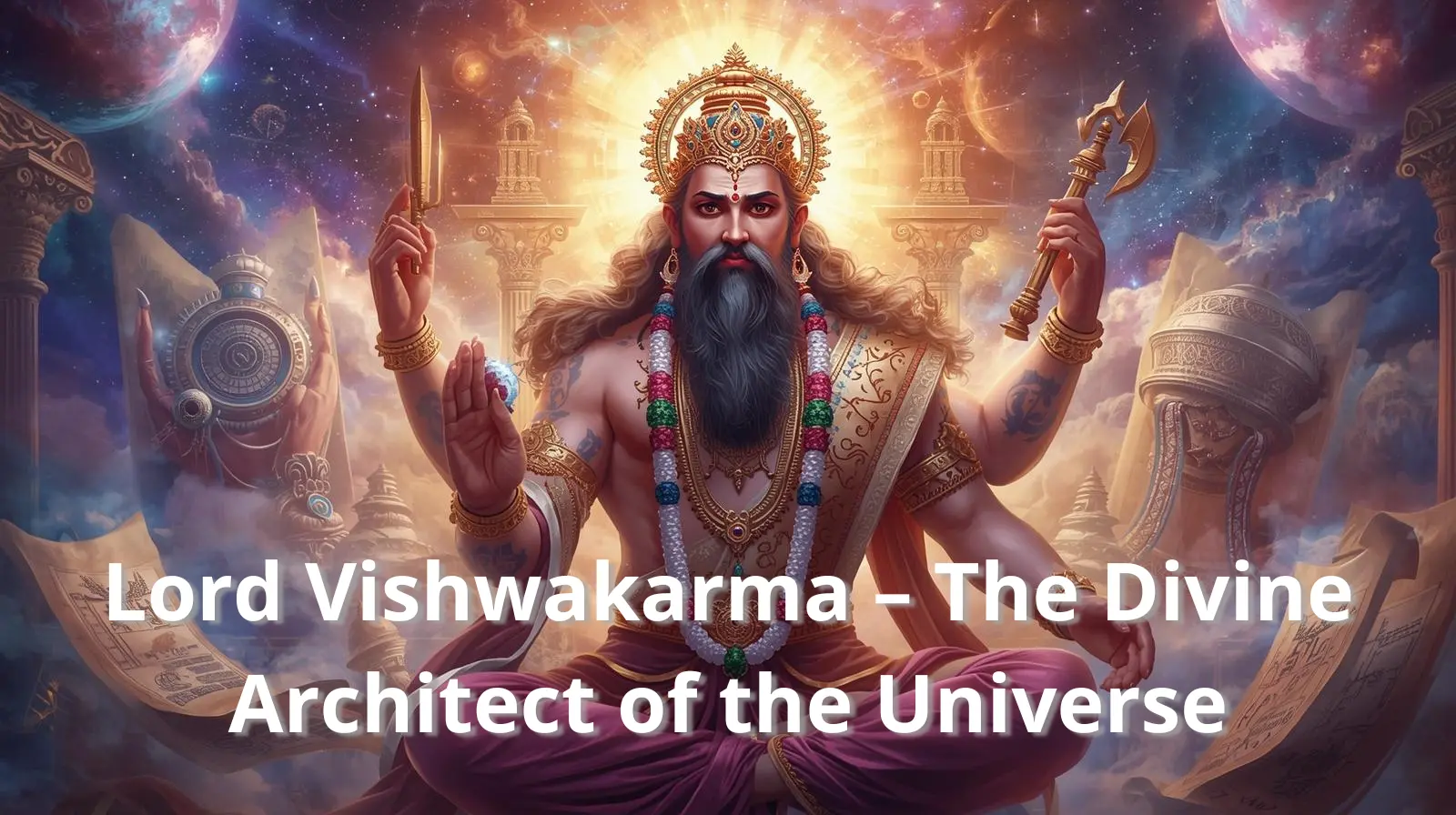
To explore more about divine creativity in Hindu tradition, read our article on Lord Vishwakarma — the Divine Architect of the Universe. And to understand how cosmic time unfolds across the Yugas, see The True Sanatan Meaning of Akshaya Tritiya.
Frequently Asked Questions
What is the Trimurti in Hinduism?
The Trimurti is the triple deity of supreme divinity in Hinduism, comprising Brahma the Creator, Vishnu the Preserver, and Shiva (Mahesh) the Destroyer. Together they represent the cosmic functions of creation, maintenance, and dissolution.
Why is Brahma not widely worshipped?
According to various Puranic legends, Brahma is rarely worshipped directly due to a curse. However, his creative energy is honored through worship of Saraswati and through the acknowledgment of creation in all Hindu rituals.
What do the three deities symbolize philosophically?
Beyond their mythological roles, the Trimurti represents the three fundamental gunas — Brahma embodies Rajas (creation/passion), Vishnu embodies Sattva (preservation/goodness), and Shiva embodies Tamas (dissolution/transformation).