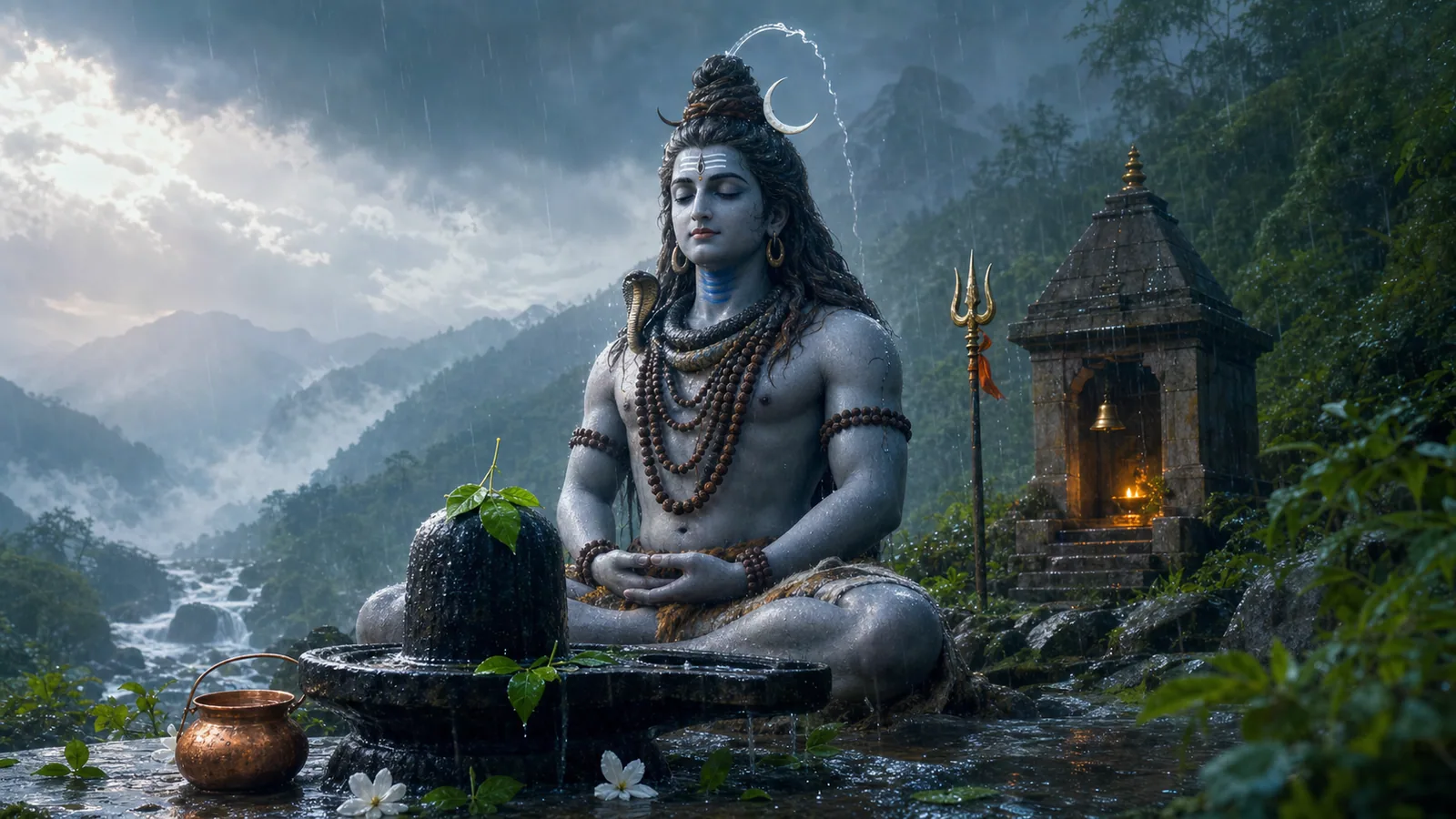
The Month When the Rains Turn to Prayer
As the monsoon settles over Bharat, a familiar music returns to the temples: bells at dawn, wet earth and incense, queues of devotees with lotas of water, and the rising chant of Har Har Mahadev. This is Shravan — called Sawan across North India, often spelled Saavan — the month the Hindu calendar sets aside, above all others, for Bhagwan Shiva.
In 2026, Shravan begins on July 30 in North India's Purnimanta calendar and on August 13 in the Amanta calendar followed in Maharashtra, Gujarat and much of southern India. These are genuinely different windows on the civil calendar, and this guide keeps them carefully apart throughout.
Whether you have kept the Sawan Somvar vrat since childhood or are approaching your first one, this guide covers why the month is sacred, its verified 2026 dates, the Monday vrat, abhishekam step by step, mantras, fasting foods, the Kanwar Yatra and the month's festivals — with gentle guidance for those who should fast lightly or not at all.
What Is Shravan (Sawan)?
Shravan is the fifth month of the Hindu lunar year, named for the Shravana Nakshatra, under which its full moon rises. The name holds a quieter meaning too: shravana is Sanskrit for "listening" — and this is traditionally the season of hearing katha, Purana and mantra, when the rains slow the outer world and the inner one opens.
Shravan arrives at the height of the monsoon, within Chaturmas — the four sacred months beginning with Devshayani Ekadashi, when tradition holds that Bhagwan Vishnu enters yogic rest. Travel once paused in these months and sadhana deepened; that old rhythm survives in Shravan's simpler food, steadier prayer and softer living. For devotees of Mahadev it is simply the year's most beloved month — every day auspicious for Shiva worship, and its Mondays most of all.
Why Shravan Is Sacred to Bhagwan Shiva: Samudra Manthan and Neelkanth
The Puranas — including the Bhagavata Purana and Vishnu Purana, with the story also told in the Mahabharata — narrate the Samudra Manthan, the churning of the cosmic ocean by the devas and asuras in search of amrita, the nectar of immortality.
But before the nectar rose, halahala surfaced — a poison so fierce it began to scorch the worlds, and none could withstand it. Out of pure compassion, Bhagwan Shiva gathered the poison and drank it; Devi Parvati, tradition tells, pressed his throat so it would lodge there, harming neither the Lord nor the world below. His throat turned deep blue, and Shiva became Neelkanth — the blue-throated Lord who swallows the world's pain and asks nothing in return.
To soothe the burning, the devas poured cool Ganga water and milk over him. Living tradition places this episode in Shravan — which is why devotees spend the month pouring water and milk on the Shivalinga, lovingly re-enacting the cooling of Mahadev.
A second thread makes the month doubly dear: tradition holds that Devi Parvati's long tapasya to win Shiva bore fruit in Shravan. This is why unmarried women traditionally keep Sawan Somvar vrats praying for a worthy partner, married women observe the Mangala Gauri vrat on its Tuesdays, and Hariyali Teej — the festival of Shiva and Parvati's togetherness — falls in this month.
One honest distinction: the churning itself is Puranic narrative, while its specific link to Shravan is cherished living tradition rather than a date-stamped verse. Both streams flow into the same devotion.
The Deeper Meaning: Monsoon, Purification and Renewal
Shravan's outer weather mirrors its inner work. The monsoon is grace made visible — parched earth revived, rivers restored, the world washed green again — and Sanatan Dharma has always read the season inwardly as well: as the earth is renewed, so may the mind be.
The Samudra Manthan is a map of the inner life too. Every sincere life churns its own ocean, and what rises first is rarely nectar — anger, grief and old habit surface the way halahala did. Neelkanth's teaching is that poison need not be swallowed alone nor spat back at the world: it can be offered to the One who transforms it. Every Shravan abhishekam is that offering in miniature — we cool the Lord who holds the world's poison, and what burns within us begins to cool.
There is practical wisdom here too: Ayurvedic tradition regards the monsoon as a season of weak digestion — part of the traditional reasoning behind Shravan's light, satvik eating and periodic fasting. And there is renewal: as the farmer sows the season's crop, the sadhaka sows discipline, trusting the harvest to come.
Why Mondays Are Special in Shravan
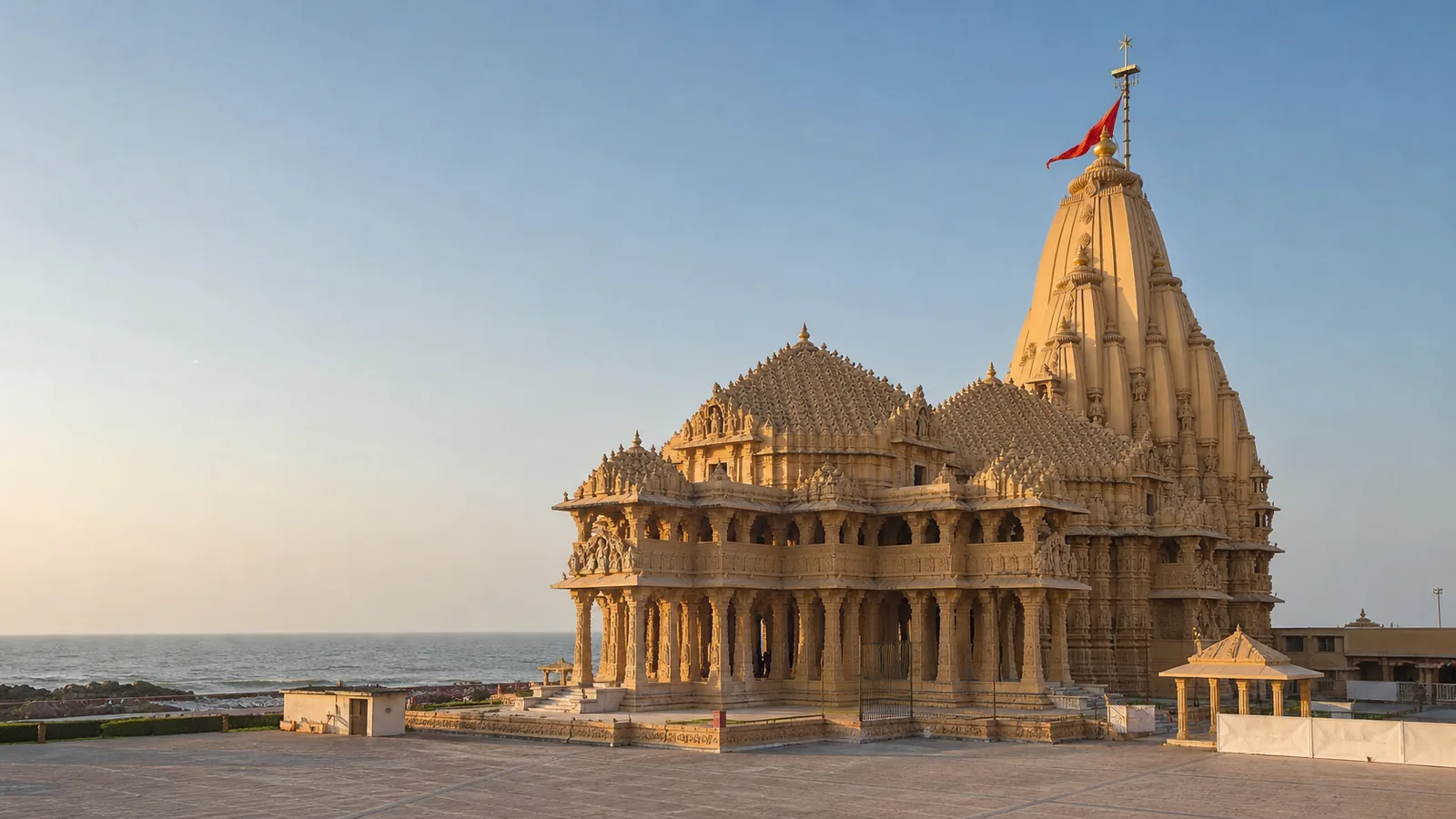
Somvar, Monday, is the day of Soma, the Moon — and no one is bound to the Moon like Shiva, who wears the crescent as Chandrashekhara. When Chandra Dev was cursed by Daksha to wane into nothing, it was Shiva who saved him, granting him his rhythm of waning and waxing — the grace for which the first of the twelve Jyotirlingas is named: Somnath, the "Lord of the Moon", on Gujarat's shore.
In yogic symbolism the Moon is manas — the mind, forever waxing and waning like thought and emotion — while Shiva is the stillness beneath its phases. To fast on a Shravan Monday is to steady the moon-mind at the feet of the Still One.
In 2026 there are four Sawan Somvars in each calendar system (dates in the table below). Many devotees also begin the Solah Somvar vrat — sixteen consecutive Monday fasts — from the first Monday of Shravan, carrying the discipline well beyond the month itself.
Shravan 2026: Verified Dates — North India and the Amanta Calendar
Hindu lunar months are counted in two ways, and Shravan is where the difference is most visible:
- Purnimanta (the month ends on the full moon) — followed in Delhi, Uttar Pradesh, Uttarakhand, Himachal Pradesh, Punjab, Haryana, Rajasthan, Madhya Pradesh, Bihar, Jharkhand and Chhattisgarh.
- Amanta (the month ends on the new moon) — followed in Maharashtra, Gujarat, Goa, Karnataka, Andhra Pradesh, Telangana, Tamil Nadu and Kerala.
Both systems share the same tithis, so bright-half festivals — Hariyali Teej, Nag Panchami, Raksha Bandhan — fall on the same civil dates everywhere. What shifts is the month's name during the dark fortnight: Shravan begins about a fortnight later in Amanta regions, and its Sawan Somvar list differs. Neither list is universal; observe the calendar your family and region follow.
| Observance | North India (Purnimanta) | Maharashtra, Gujarat & South (Amanta) |
|---|---|---|
| Shravan begins | Thursday, July 30, 2026 | Thursday, August 13, 2026 |
| Shravan ends | Friday, August 28, 2026 | Friday, September 11, 2026 |
| First Sawan Somvar | August 3, 2026 | August 17, 2026 |
| Second Sawan Somvar | August 10, 2026 | August 24, 2026 |
| Third Sawan Somvar | August 17, 2026 | August 31, 2026 |
| Fourth Sawan Somvar | August 24, 2026 | September 7, 2026 |
These dates have been cross-checked against Drik Panchang and other published Panchang calendars for 2026. Exact tithi start and end times still vary by city — for sankalpa muhurta, consult your local panchang or temple.
Calendar sources
- Drik Panchang: Shravana 2026 festivals and North Indian dates
- Drik Panchang: Mumbai Amanta calendar for August 2026
Panchang calculations are location-sensitive. Readers outside India, or those taking a time-specific sankalpa, should select their city in a trusted local panchang before observing the vrat.
Sawan Somvar Vrat: A Simple Procedure
The Monday fast is beautifully uncomplicated. Living practice accepts several levels of strictness — choose the one your health and family custom support:
- Rise early, bathe, and wear clean clothes — many devotees prefer white or light colours.
- Take sankalpa — a quiet spoken intention that you are keeping the Sawan Somvar vrat for Bhagwan Shiva, and in what manner.
- Offer morning worship at home or a temple: water on the Shivalinga, bel patra, and the japa of Om Namah Shivaya.
- Choose your fast: nirjala (no food or water — kept by very few and not advisable without robust health), phalahar (fruits, milk and vrat foods), or a single satvik meal in the day. All three are accepted in living tradition.
- Keep the day gently devotional — japa, Shiva katha, the Shiva Purana, or attending a Rudrabhishek.
- Offer evening worship and aarti, traditionally with the Somvar vrat katha retold at home.
- Break the fast after the evening puja, or the next morning, as your family custom holds — begin with something light.
No single rigid method is compulsory for everyone. The vrat's heart is remembrance, not hunger.
Shiva Puja and Abhishekam, Step by Step
You will need: water (Gangajal if available); milk, curd, honey, ghee and sugar — together the panchamrit; bel patra, white flowers, chandan, dhoop, a diya, and a simple naivedya such as fruit. Dhatura or aak flowers, traditional in many regions, may be added per local custom.
- Purify the space and yourself; light the diya.
- Invoke Shree Ganesha first, as before every worship.
- Take sankalpa for the puja.
- Abhishekam: pour water over the Shivalinga in a slow, steady stream, then each panchamrit item one by one, then water again to complete the bathing. Chant Om Namah Shivaya throughout.
- Adorn: apply chandan, then offer bel patra — ideally unbroken, three-leafed, placed smooth side down.
- Offer white flowers, dhoop and the lamp.
- Offer naivedya and a little water.
- Do japa — 108 repetitions of Om Namah Shivaya or the Mahamrityunjaya mantra.
- Conclude with aarti and kshama prarthana — asking the Lord's pardon for any error in the worship, the tradition's tender final step.
Two customs worth knowing: many traditions do not offer tulsi leaves, turmeric, kumkum or ketaki flowers on the Shivalinga, and only temple priests touch a consecrated Jyotirlinga. Follow the practice of your own temple and family where customs differ.
What the Offerings Mean
- Water — the heart of Shravan, recalling the cooling of Neelkanth and the monsoon's grace. Tradition insists Shiva is Ashutosh, easily pleased: one ladle of clean water, offered with love, is enough.
- Milk — nourishment and sattva; the whiteness of a clean intention.
- Bel patra — the trifoliate leaf beloved of Shiva; its three leaflets are read as his trident, his three eyes, or the three gunas laid at his feet.
- White flowers — purity and vairagya, the fragrance of a settling mind.
- Rudraksha — "the tears of Rudra" in tradition; a 108-bead mala steadies japa and keeps the Lord's name at the fingertips.
- Mantra — sound itself as offering. Of everything poured and placed, the steadiest gift is attention.
Mantras for the Month of Shravan
The Panchakshara Mantra
ॐ नमः शिवाय
Om Namah Shivaya — "I bow to Shiva." The five sacred syllables na-mah-shi-va-ya are the seed of all Shiva bhakti, suited to every person, place and hour.
The Mahamrityunjaya Mantra (Rigveda 7.59.12)
ॐ त्र्यम्बकं यजामहे सुगन्धिं पुष्टिवर्धनम्। उर्वारुकमिव बन्धनान्मृत्योर्मुक्षीय मामृतात्॥
Om tryambakam yajamahe sugandhim pushti-vardhanam, urvarukam iva bandhanan mrityor mukshiya ma'mritat — "We worship the three-eyed Lord, fragrant, nourisher of all beings; as the ripe gourd slips free of its vine, may he release us from death — not from immortality."
The Rudra Gayatri
ॐ तत्पुरुषाय विद्महे महादेवाय धीमहि। तन्नो रुद्रः प्रचोदयात्॥
Om tatpurushaya vidmahe mahadevaya dhimahi, tanno rudrah prachodayat — "May we know the Supreme Being; may we meditate upon Mahadev; may Rudra illumine and impel us."
Perfect Sanskrit is not a precondition of grace. Pronunciation ripens with practice; bhava — the feeling behind the sound — is the real offering.
What Devotees Eat During Sawan Fasts
Common vrat foods across most regions include fresh fruits; milk, curd and paneer; makhana and dry fruits; sabudana khichdi or vada; puris and pakoris of kuttu (buckwheat) or singhara (water chestnut) flour; samak (barnyard millet) rice; potatoes and sweet potato; and sendha namak (rock salt) in place of common salt.
On fast days most households set aside ordinary grains, onion and garlic, and many keep a satvik kitchen all month — vegetarian, light, freshly cooked. The boundaries genuinely differ by region and family: some fast till sunset, some take one meal, some simply give up an indulgence. All are authentic. Eat in the way that keeps the body able and the mind clear for worship.
What Tradition Encourages — and What It Sets Aside
Encouraged through the month: daily jal-abhishek or temple darshan; the Shiva Chalisa, Rudrashtakam or Shri Rudram; Shiva Purana katha; charity, especially feeding the hungry; tree-planting in the spirit of the month's hariyali; and a general softening of speech and habit.
Commonly set aside, with regional and family variation: non-vegetarian food and alcohol almost universally; onion and garlic in many households; haircuts and shaving in some families; and, by old monsoon wisdom, leafy greens and brinjal in several regions.
These are customs, not cosmic law, and they vary honestly across Bharat. Shravan's essence is not a list of prohibitions but a month lived more cleanly, gently and prayerfully — discipline as affection, never as fear.
The Kanwar Yatra: Carrying the Ganga to Shiva
Through the first fortnight of North India's Shravan, the highways turn saffron. Millions of devotees — kanwariyas — walk to Haridwar, Gaumukh, Gangotri or Sultanganj, fill vessels with Ganga jal and carry them home on a decorated bamboo pole, the kanwar. The discipline is exacting: the vessels must not touch the ground, many walk barefoot, and chants of Bol Bam keep the miles moving — tapasya carried joyfully in company.
The water is finally poured on a Shivalinga — at home or at great temples like Kashi Vishwanath, Baidyanath, Pura Mahadeva and Augharnath — most traditionally on Sawan Shivratri, Tuesday, August 11, 2026. The symbolism completes the month's circle: the Ganga the devas poured on Neelkanth, now carried on human shoulders back to Shiva.
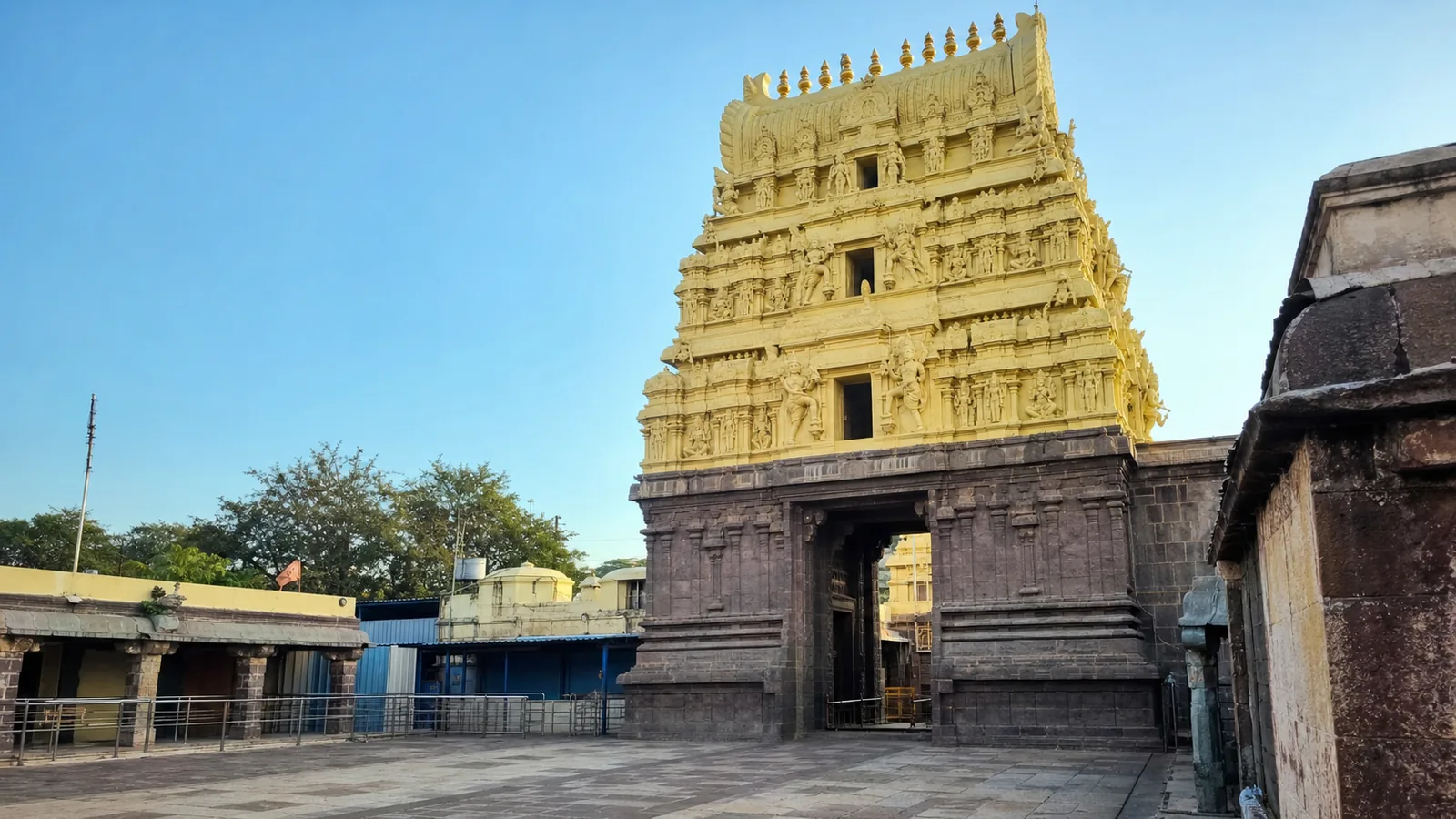
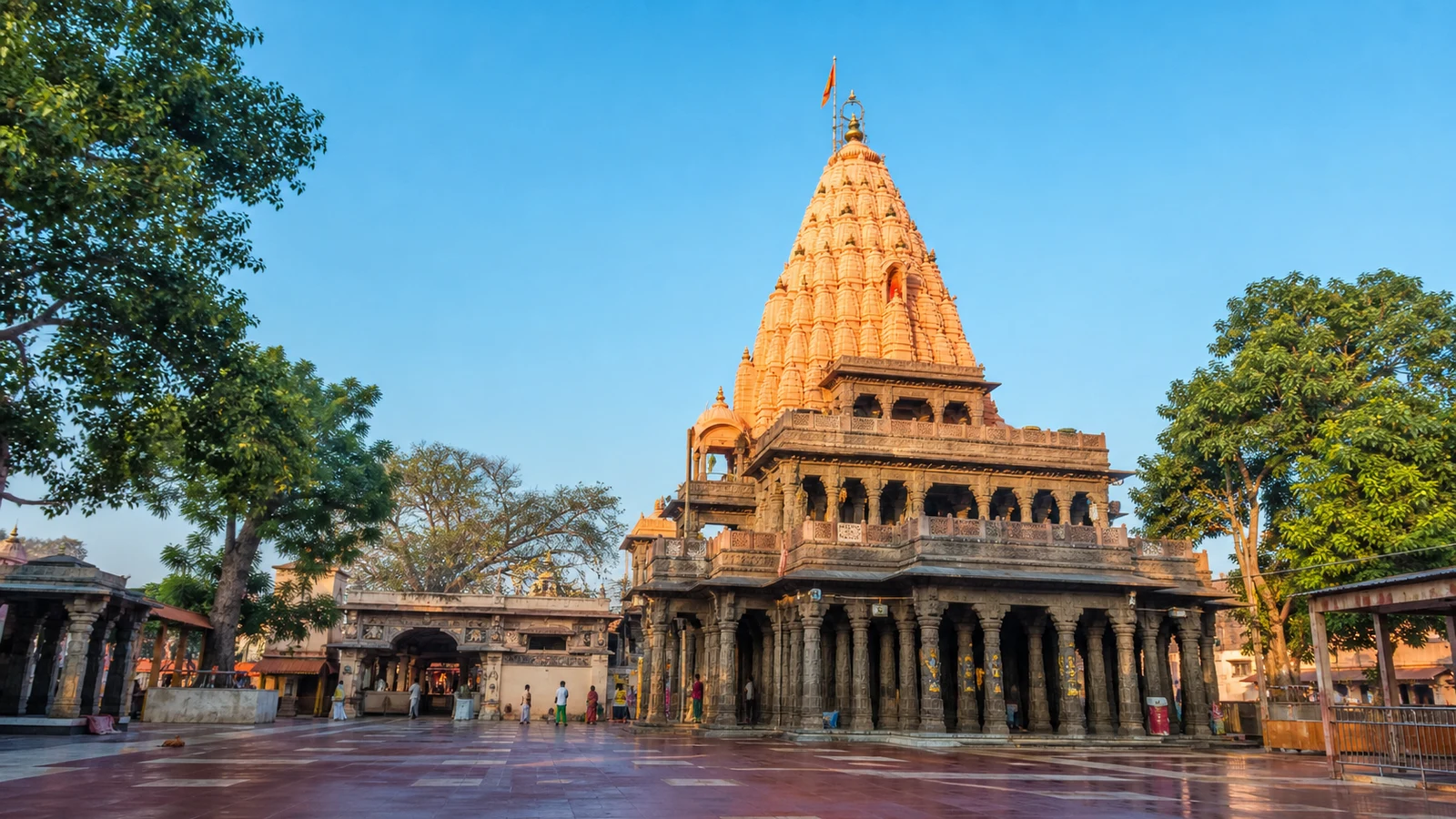
For many devotees a Shravan pilgrimage means a Jyotirlinga darshan instead — from Somnath on Gujarat's coast to Mallikarjuna at Srisailam, where Jyotirlinga and Shakti Peetha share one hill. Expect Shravan crowds at both, and the sweetest atmosphere of the year.
Major Shravan Observances and Festivals in 2026
Dates below follow the North Indian (Purnimanta) reckoning; the bright-half festivals fall on the same civil dates in Amanta regions as well.
- Kamika Ekadashi — Sunday, August 9: the dark-fortnight Ekadashi, observed with fasting and Vishnu worship.
- Sawan Shivratri — Tuesday, August 11: the month's night of Shiva; Kanwar jalabhishek reaches its peak.
- Hariyali Amavasya — Wednesday, August 12: the new moon of greenery — tree-planting and ancestor remembrance.
- Hariyali Teej — Saturday, August 15: the union of Shiva and Parvati — swings, mehndi and the green of the season.
- Nag Panchami — Monday, August 17: honouring the serpent protector — falling this year on a Sawan Somvar itself.
- Shravan Putrada Ekadashi — Sunday, August 23: the bright-fortnight Ekadashi, kept especially by parents praying for their children.
- Raksha Bandhan / Shravan Purnima — Friday, August 28: the full moon of protection and the tying of rakhi; coastal Maharashtra offers coconuts to the sea as Narali Purnima, and many communities renew the sacred thread in the Shravani Upakarma.
Every Tuesday of the month carries the Mangala Gauri vrat in honour of Devi Parvati. In Amanta regions, where Shravan runs into September, the month embraces further observances — including Krishna Janmashtami — within itself.
For Beginners, Elders and Anyone with Health Concerns
If this is your first Shravan, start small and steady: one Monday fast rather than four, one mala of Om Namah Shivaya daily, water and a bel patra offered with attention. A small vrat kept with love outweighs a grand one kept with strain.
And let this be said plainly: devotion never requires harming your health. Pregnant and breastfeeding women, the elderly, children, and anyone with a medical condition or on regular medication should consult a doctor before fasting — and should feel entirely unburdened choosing a gentler form: a phalahar day, a single satvik meal, or no fast at all, with japa, seva or charity instead. Shiva drank poison so the world would not suffer; he does not ask his devotees to suffer to please him. A fast is one door into Shravan — never the only one.
Let the Rain Fall Inward
Shravan asks for one month of a softer life — earlier mornings, simpler food, a steadier stream of remembrance — and offers in return what the monsoon offers the earth: renewal from the roots up. The water poured on the linga, the Mondays kept, the whispered Om Namah Shivaya — all of it is one gesture: the moon-mind bowing to the Still One.
May this Shravan wash something clean in you, and may what you sow in its rains be harvested all year.
Har Har Mahadev.
Frequently Asked Questions
When does Sawan 2026 start and end?
In North India's Purnimanta calendar, Shravan 2026 runs from Thursday, July 30 to Friday, August 28. In the Amanta calendar followed in Maharashtra, Gujarat and southern India, it runs from Thursday, August 13 to Friday, September 11.
How many Sawan Somvar vrats are there in 2026?
Four in each system. North India (Purnimanta): August 3, 10, 17 and 24. Maharashtra, Gujarat and the South (Amanta): August 17, 24, 31 and September 7.
Why do North and South India observe Shravan on different dates?
North India follows the Purnimanta calendar, in which a month ends on the full moon, while western and southern India follow the Amanta calendar, in which it ends on the new moon. The month's name shifts by about a fortnight, though bright-half festivals like Teej, Nag Panchami and Raksha Bandhan fall on the same civil dates everywhere.
Why is the month of Shravan dedicated to Bhagwan Shiva?
Tradition associates Shravan with the Samudra Manthan, when Shiva drank the halahala poison to save creation and became Neelkanth. Devotees offer water and milk on the Shivalinga all month, echoing how the devas cooled him. Tradition also holds that Devi Parvati's austerities to win Shiva bore fruit in this month.
What can I eat during a Sawan Somvar fast?
Commonly: fruits, milk, curd, makhana, dry fruits, sabudana dishes, kuttu or singhara flour preparations, samak rice and rock salt (sendha namak) instead of common salt. Many families simply take one satvik meal. Practices vary by region and family — there is no single compulsory rulebook.
Is it compulsory to fast every Monday of Shravan?
No. Fasting is a loving discipline, not a demand. Many devotees keep all Sawan Somvars, others keep one, and others simply offer water and bel patra with a sincere heart. Shiva is called Ashutosh — easily pleased — and devotion matters more than austerity.
When is Sawan Shivratri 2026, and what is the Kanwar Yatra?
Sawan Shivratri falls on Tuesday, August 11, 2026 in the North Indian calendar. The Kanwar Yatra is the pilgrimage in which devotees carry Ganga water on foot to offer on Shivalingas, traditionally culminating in jalabhishek on Sawan Shivratri.
Can pregnant women, the elderly or people with medical conditions keep the Sawan fast?
Devotion never requires harming one's health. Anyone who is pregnant, elderly, diabetic, on regular medication or otherwise medically vulnerable should consult a doctor before fasting, and may instead offer simple worship, japa or charity — all fully honoured forms of Shravan observance.