The Completion of the Circle
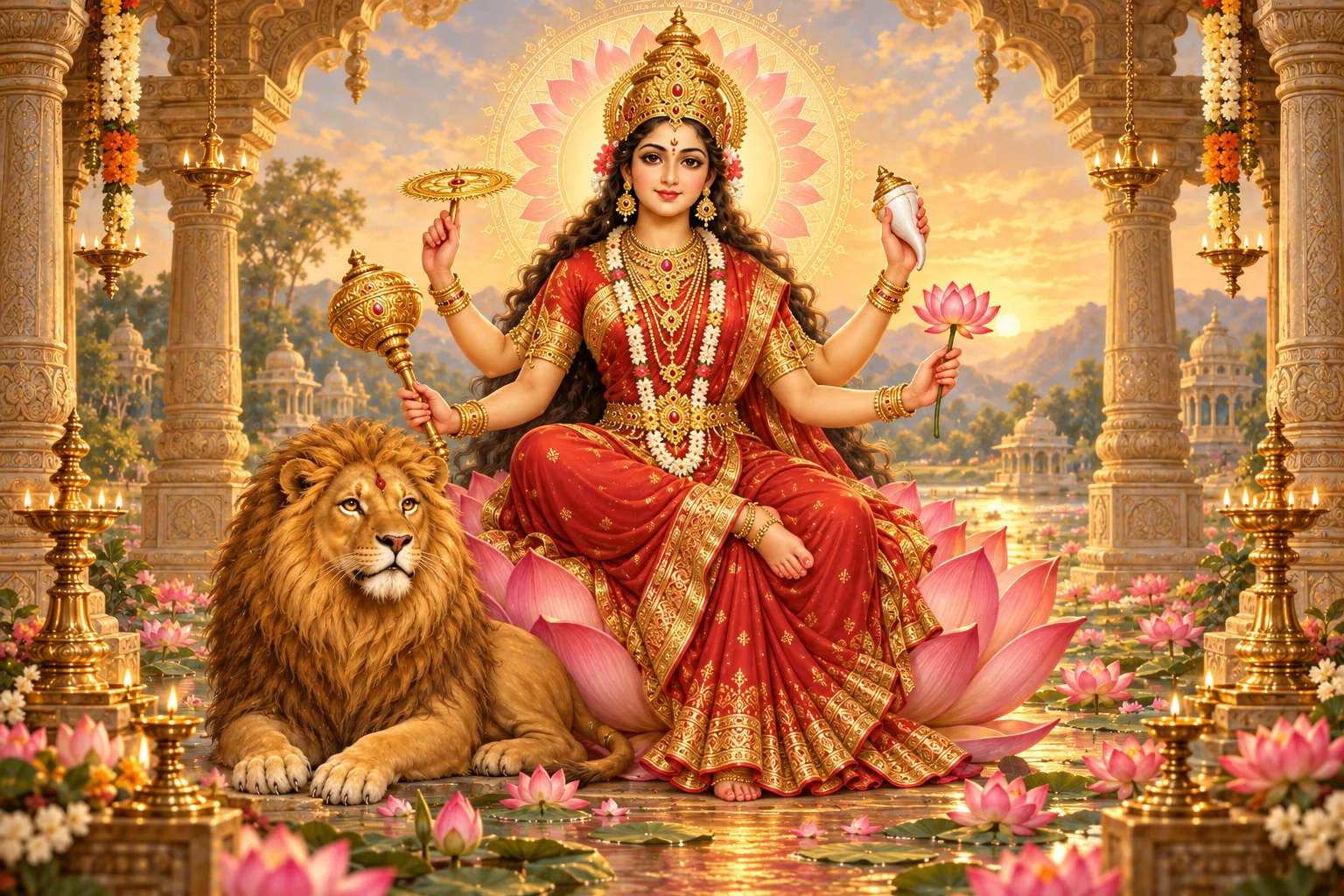
Every journey of nine nights arrives, at last, at a form that contains all the others. Maa Siddhidatri — "the giver of siddhis" — is the ninth and culminating Navdurga: seated on a fully opened lotus, four-armed, serene, the Devi not in struggle or battle but in attainment. Around her, tradition says, stand not only humans but devas, gandharvas, yakshas, siddhas — even asuras — all seeking what she alone bestows.
Her worship belongs to Navami tithi, and 2026 asks for honest precision here. The Navami tithi runs from 10:51 AM on Monday, October 19 to 12:50 PM on Tuesday, October 20 (Delhi). Because Ashtami ended mid-morning on the 19th, Maha Navami is marked that same day, with the Navami Homa and Navratri Parana on the 20th. The 2026 day-wise calendar therefore assigns Siddhidatri no separate civil day of her own — her worship is joined to the Maha Navami rites of October 19 and completed with the homa on the morning of October 20. This year, more than most, the ninth form teaches the festival's first lesson: follow the tithi, not the date.
Maa Siddhidatri at a Glance
| Traditional order | 9th of the Navdurga — the culmination |
| Tithi | Navami (ninth lunar day) — Maha Navami |
| 2026 worship window | Navami tithi: 10:51 AM Mon, Oct 19 → 12:50 PM Tue, Oct 20 (Delhi). Maha Navami observed Oct 19; Navami Homa, Parana and Vijayadashami on Oct 20 |
| Vahana / Asana | Lion; seated on a lotus (kamal) |
| Iconography | Four arms — gada and chakra in the right hands; lotus and shankha in the left |
| Governing planet | Ketu |
| Traditional bhog | Sesame (til); Kanya Puja meal where Navami Kanya Puja is the family custom |
| Flower | Night-blooming jasmine; lotus |
| Day colour (popular custom) | Peacock green (Oct 19) in 2026 — a weekday-based custom, not a scriptural rule |
The verified full calendar is on the series landing page.
The Name: Giver of Attainment
Siddhi is attainment — spiritual perfection, accomplished power, the goal reached; datri is the feminine giver. Siddhidatri is she from whom all attainment comes — the tradition's declaration that no power, human or divine, is self-made. The Devi Kavacham closes its enumeration with her: "navamam Siddhidatri cha, Navadurgah prakirtitah" — ninth Siddhidatri; thus are the nine Durgas proclaimed.
The classical ashta siddhis — eight yogic attainments — associated with her grace (in the Markandeya Purana tradition's listing): anima (to become minute), mahima (to become vast), garima (heaviness), laghima (lightness), prapti (to reach anything), prakamya (unobstructed will), ishitva (lordship) and vashitva (mastery). The tradition is careful with these: they are descriptions of consciousness perfected, held up for reverence — not party tricks promised to weekend practitioners.
Her Story: The Left Half of Shiva
Siddhidatri's account reaches back before every other story in this series — to the beginning of things.
In the beginning, tradition says, Bhagwan Rudra worshipped the Adi-Parashakti — the supreme Power — for the sake of creation. The Adi Shakti had no form; she was prior to form. In response to that worship she appeared from Shiva's own left half as Siddhidatri — and from that moment Shiva is Ardha-Narishvara, "the Lord who is half woman": the deity whose very body declares that consciousness and power, Shiva and Shakti, are one reality seen from two sides. By her grace, tradition adds — a detail of lovely audacity — Shiva himself received his siddhis.
Set beside the first article of this series, the design of the Navdurga reveals itself. The sequence began with Shailputri, the Devi arriving as a daughter to seek union with Shiva; it ends with Siddhidatri, who was never separate from him at all. The nine nights walk the devotee from longing to identity — from seeking the divine to discovering it was always half of one's own being. For the wider doctrine of the One appearing as many, see the eternal trinity of Hinduism.
Iconography: Enthroned on the Lotus
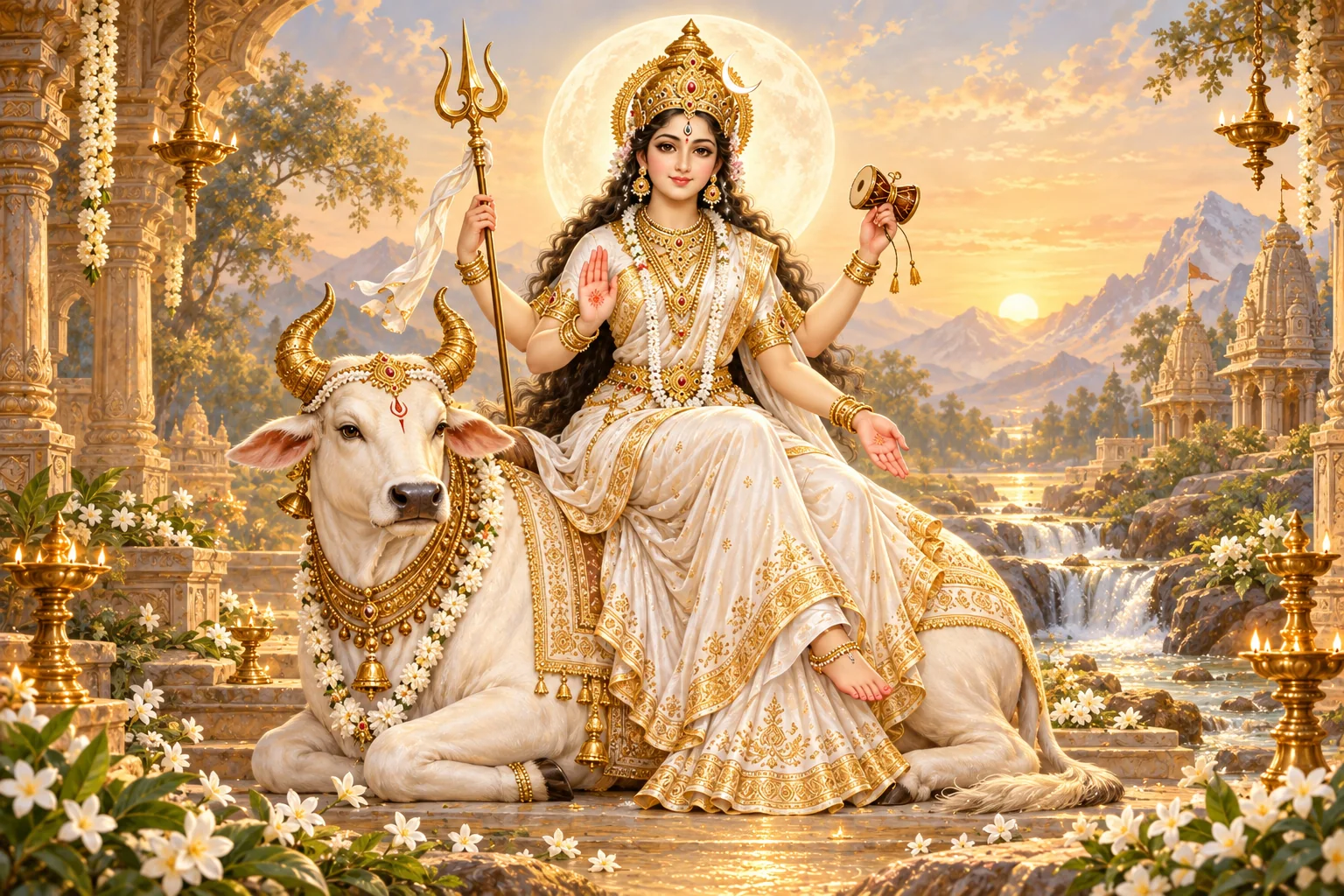
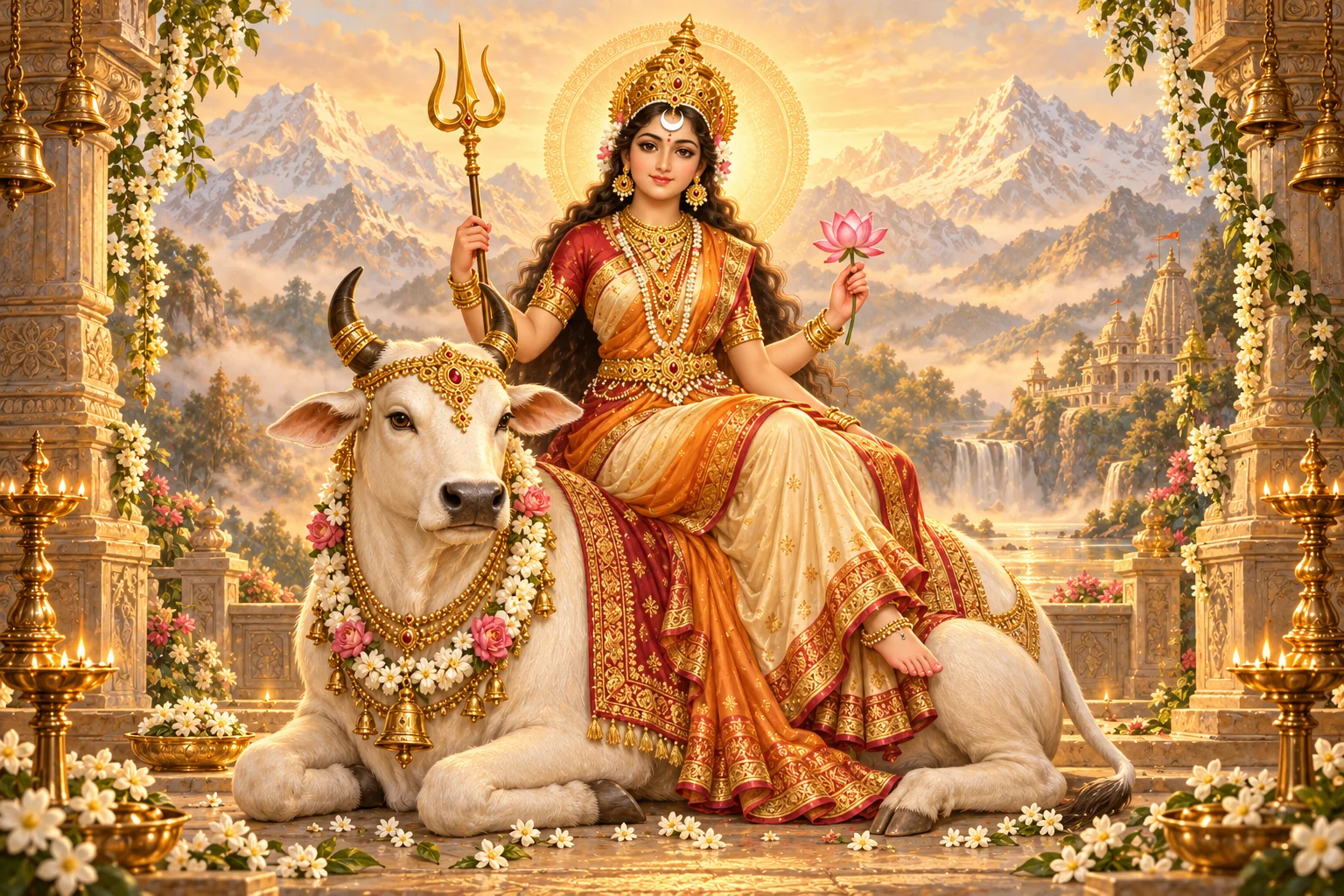
Maa Siddhidatri sits on a fully bloomed lotus — the classical seat of accomplished perfection — with the lion beside her as mount. Her four arms hold the gada (mace) and chakra (discus) on the right, and the lotus and shankha (conch) on the left: Vishnu's emblems and the Devi's own, gathered in one calm figure. Nothing in her image strains; the battles are behind, the attainment complete.
Tradition assigns her governance of Ketu — the shadow-planet of moksha and detachment — the fitting final planet for the form that gives the final gift.
How to Worship Maa Siddhidatri at Home (2026)
Because of this year's compressed calendar, a practical sequence:
- Monday, October 19 (after mid-morning): once Navami begins (10:51 AM, Delhi), Maha Navami worship is offered — many families perform their Siddhidatri puja alongside or immediately after the Ashtami rites, with Kanya Puja where Navami is the family's customary day.
- Offer sesame (til) — til laddoos or til-gur sweets — her traditional bhog; also lotus or night-blooming jasmine flowers.
- Chant her mantra (below); families completing a nine-night Durga Saptashati path traditionally finish it on Navami, closing with the Devi Kavacham or Siddhakunjika as their parampara directs.
- Tuesday, October 20 (morning): Navami Homa — the concluding fire offering — where the family tradition keeps it; then Navratri Parana after the tithi ends (12:50 PM, Delhi), the ceremonial breaking of the fast.
- The same day carries Durga Visarjan and Vijayadashami — the farewell to the Devi and the festival of her victory.
Our Practices & Rituals section covers the shared basics; check a panchang for your own city's tithi windows.
Mantra, Prarthana and Meaning
Mantra
ॐ देवी सिद्धिदात्र्यै नमः॥
Om Devi Siddhidatryai Namah — "Om, salutations to Devi Siddhidatri."
Prarthana (as given in the Navdurga tradition):
सिद्ध गन्धर्व यक्षाद्यैरसुरैरमरैरपि। सेव्यमाना सदा भूयात् सिद्धिदा सिद्धिदायिनी॥
Siddha Gandharva Yakshadyair Asurair Amarair Api, Sevyamana Sada Bhuyat Siddhida Siddhidayini.
"Ever served by siddhas, gandharvas, yakshas, asuras and immortals alike — may the giver of siddhis, the bestower of attainment, be ever gracious."
Offerings, Flowers and the Day's Colour
- Bhog: sesame (til) — the ninth day's traditional offering; til-gur laddoos travel beautifully to neighbours and the needy.
- Flowers: night-blooming jasmine is named as her flower; the lotus, her throne, is offered where available.
- Colour: the popular calendar's peacock green belongs to October 19, 2026; as throughout the series, the day-colours are a beloved weekday-based custom, not scripture.
A Reflection for Navami
Siddhidatri's day asks the festival's closing question: what was all this for? Nine nights of lamps, fasts and stories end not in exhaustion but in completion — the Devi seated, finished, whole. The tradition's answer to "what is attainment?" is quietly radical: not acquiring something new, but recognising what was never absent — as Shiva found the Shakti in his own left half.
On the vrat's end: break the fast gently at Parana — fruit and something light before a full meal; after nine days, the stomach deserves the same consideration the spirit received. Share food generously; the festival's merit, the tradition says, walks out the door with the prasada.
And then, on Vijayadashami, the murti goes to the water, the kalash is taken up, and the barley sprouts — sown on Shailputri's day — stand a hand tall: the quiet proof that what begins in faith ends in growth. Jai Mata Di. The whole series lives at Navratri: Nine Forms of Maa Durga.
References
- Drik Panchang — Goddess Siddhidatri: the Ardhanarishvara account, iconography, mantra, ninth-day worship.
- Drik Panchang — Maha Navami 2026 (New Delhi): Maha Navami on October 19; Navami tithi timings; Parana on October 20.
- Drik Panchang — 2026 Shardiya Navratri Calendar (New Delhi): the compressed 2026 sequence; Vijayadashami 2026 for the October 20 date (Bengal rule: October 21).
- Durga Saptashati with Devi Kavacham (Markandeya Purana tradition; Gita Press, Gorakhpur) — "navamam Siddhidatri cha"; the ashta siddhi list per the Markandeya Purana tradition.
Frequently Asked Questions
When is Maa Siddhidatri worshipped in Navratri 2026?
Maa Siddhidatri is the devi of Navami tithi, which in 2026 (Delhi) runs from 10:51 AM on Monday, October 19 to 12:50 PM on Tuesday, October 20. Maha Navami is marked on October 19 by the Drik Panchang convention, with Navami Homa and Navratri Parana on October 20 — so her worship joins the Maha Navami rites of the 19th and concludes with the homa on the morning of the 20th. The 2026 day-wise calendar lists no separate civil day for her, which is why checking the tithi matters more than counting days this year.
What is Maa Siddhidatri's mantra?
Her simple mantra is 'Om Devi Siddhidatryai Namah' (ॐ देवी सिद्धिदात्र्यै नमः). The traditional prarthana is 'Siddha Gandharva Yakshadyair Asurair Amarair Api, Sevyamana Sada Bhuyat Siddhida Siddhidayini' — may the giver of siddhis, ever served by siddhas, gandharvas, yakshas, asuras and devas alike, be ever gracious.
What are the ashta siddhis Maa Siddhidatri grants?
The classical list of eight yogic attainments associated with her: anima (minuteness), mahima (vastness), garima (heaviness), laghima (lightness), prapti (reach), prakamya (unobstructed will), ishitva (lordship) and vashitva (mastery). Tradition holds that even Bhagwan Shiva received his siddhis by her grace.
What bhog is offered to Maa Siddhidatri?
Sesame seeds (til), and dishes made of them, are the traditional ninth-day offering. Homes performing Kanya Puja on Navami offer the puri-chana-halwa meal. Night-blooming jasmine is her flower; she is seated on a lotus, so lotus flowers are also offered where available.
What is the connection between Maa Siddhidatri and Ardhanarishvara?
Tradition says that at the beginning of creation Bhagwan Rudra worshipped the formless Adi-Parashakti, who appeared as Siddhidatri from his own left half — which is how Shiva came to be Ardha-Narishvara, the lord who is half woman. The ninth form thus completes the series where the first began: the Devi and Shiva inseparable.
When is Navratri Parana in 2026?
Navratri Parana — the ceremonial breaking of the nine-day fast — falls on Tuesday, October 20, 2026 after the Navami tithi ends (12:50 PM, Delhi convention), the same day as Durga Visarjan and Vijayadashami. Regional conventions differ; Bengal observes Vijayadashami on October 21.