The Devi Begins Again
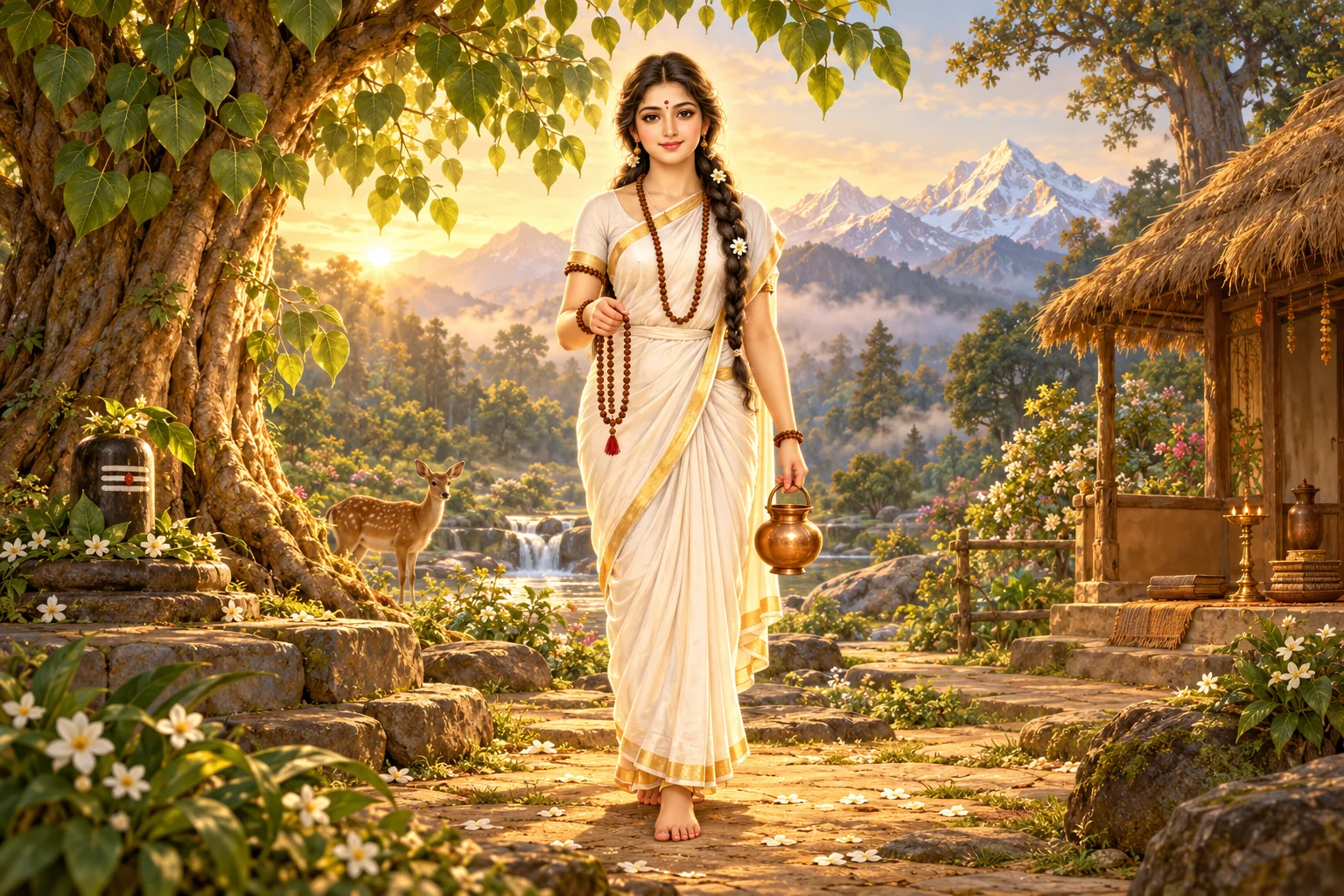
Every Navratri begins with a homecoming. On the first morning, as the kalash is installed and barley is sown in a bed of earth, the tradition remembers a daughter returning to the world she once left — Sati, reborn as the daughter of the mountain king Himalaya. She is Maa Shailputri, the first of the nine Navdurga, and in 2026 her worship falls on Sunday, October 11 — the Ghatasthapana day of Shardiya Navratri.
There is a quiet logic in beginning the nine nights with her. Shailputri is the Devi starting over: a new birth, a new name, a new ascent toward the same eternal union with Bhagwan Shiva. Navratri, too, is a new beginning — for homes, for vows, for the inner life. The tradition opens its greatest festival of Shakti with the form that teaches how to begin.
Maa Shailputri at a Glance
| Traditional order | 1st of the Navdurga |
| Tithi | Pratipada (first lunar day of Ashwin Shukla Paksha) |
| 2026 worship date | Sunday, October 11, 2026 (New Delhi, Drik Panchang convention) — also Ghatasthapana day |
| Vahana | Vrishabha, the bull — hence her name Vrisharudha |
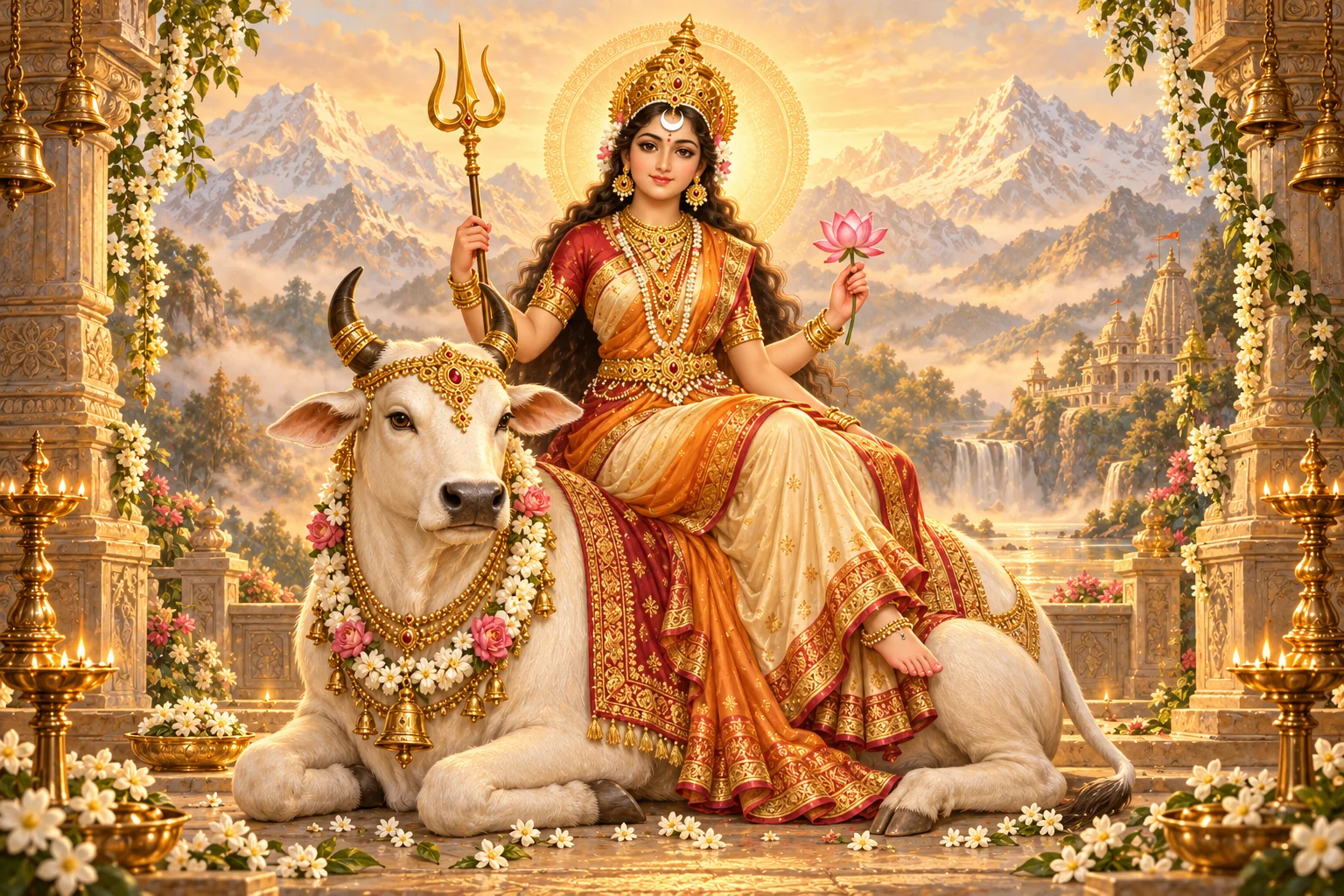
| Iconography | Two arms — trishul in the right hand, lotus in the left; crescent moon on the forehead |
| Governing planet | Chandra (the Moon) |
| Traditional bhog | Desi ghee |
| Flower | Jasmine (chameli) |
| Day colour (popular custom) | Orange in 2026 — a weekday-based custom, not a scriptural rule |
Note on "Day 1": the Navdurga sequence counts tithis, not calendar dates. In 2026 the two counts match at the start of the festival, but they drift apart later — Saptami stretches across two civil days — so the festival runs ten days, October 11–20. The series landing page carries the full verified calendar.
The Name: Daughter of the Mountain
Shaila (शैल) is Sanskrit for mountain or stone; putri (पुत्री) means daughter. Shailputri is simply "the daughter of the mountain" — of Himavan (Himalaya), the king of mountains. She is also called Hemavati (of Himavan) and Parvati (of the parvata, the mountain) — the name by which the world knows her best. Because she rides the bull, the Devi Kavacham tradition also salutes her as Vrisharudha, the bull-mounted one.
A mountain is the tradition's image for what does not move: patience, stability, the tapasya of simply standing firm through seasons. To be the mountain's daughter is to inherit exactly those qualities — and the nine nights begin by asking us to find them in ourselves.
Her Story: Sati Reborn
Maa Shailputri's story is the continuation of one of the most moving accounts in the Shiva Purana's Sati and Parvati Khandas.
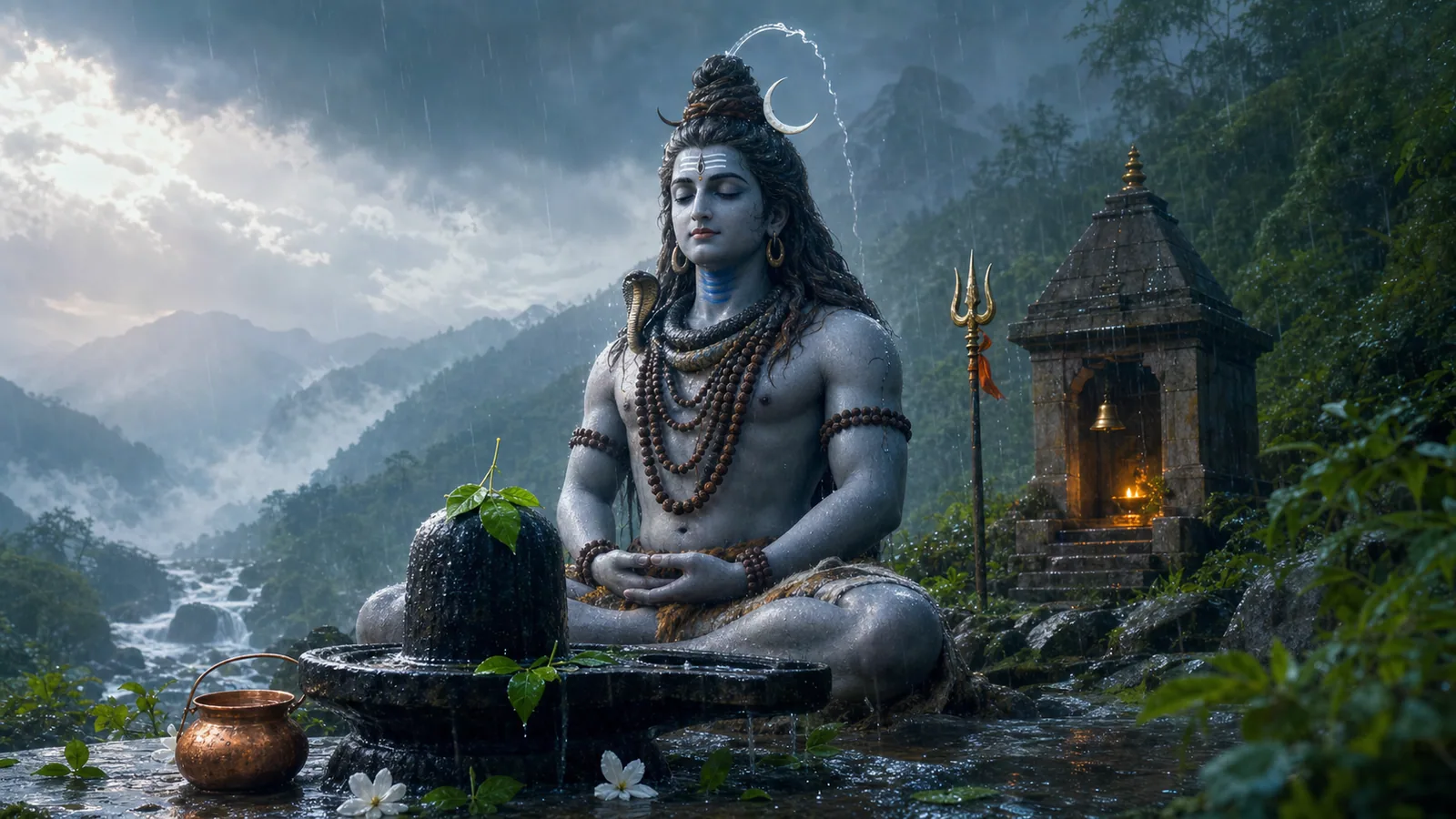
In her previous birth, the Devi was Sati, daughter of Daksha Prajapati and the beloved of Bhagwan Shiva. When Daksha organised a great yajna and deliberately insulted Shiva by excluding him, Sati — torn between her father's house and her husband's honour — gave up her body in the fire of her own yogic anger. Shiva's grief shook the worlds.
But the Adi Shakti does not end; she returns. The Devi took birth again, this time in the household of Himavan and Maina, as the mountain's daughter. The Shiva Purana and, in its literary retelling, Kalidasa's Kumarasambhava describe her childhood in the high Himalaya — a girl drawn irresistibly toward Shiva from her earliest years, as though the previous life's love had simply crossed over with her.
As Shailputri she would grow into the tapasvini who wins Shiva again — but that is the next form's story. On Pratipada, the tradition contemplates the beginning itself: the Devi choosing to be born, choosing a family of stone and snow, and setting out once more on the long path back to her own.
The authority for worshipping her first is the Devi Kavacham of the Durga Saptashati (the Markandeya Purana tradition), which enumerates the nine forms:
प्रथमं शैलपुत्री च द्वितीयं ब्रह्मचारिणी। तृतीयं चन्द्रघण्टेति कूष्माण्डेति चतुर्थकम्॥
"First Shailputri, second Brahmacharini, third Chandraghanta, fourth Kushmanda…"
Iconography: The Trident and the Lotus
Maa Shailputri is depicted with two hands — among the simplest forms in the Navdurga. The right hand holds the trishul, Shiva's own weapon, marking her as his eternal consort and the bearer of his power. The left holds a lotus, the symbol of devotion rising unstained through the mud of the world. A crescent moon rests on her forehead, and she rides Nandi-like Vrishabha, the white bull — the animal of steady dharma.
Read together, the image is a teaching: strength (trishul) and softness (lotus) carried in the same body, moving through life at the bull's unhurried, unstoppable pace. Tradition associates her with Chandra, the Moon — the planet of mind and emotion — and holds that her worship steadies the restless mind the way a mountain steadies the land.
How to Worship Maa Shailputri at Home
The first day's worship is woven into Ghatasthapana. A simple householder's sequence — families and regions differ, and your own parampara comes first:
- Bathe and clean the puja space early; in 2026 the Ghatasthapana muhurta in Delhi runs 6:19–10:12 AM (Abhijit: 11:44 AM–12:31 PM).
- Install the kalash: a clay or metal pot of clean water, topped with mango leaves and a coconut wrapped in red cloth, set on a bed of earth sown with barley (sapta dhanya).
- Invoke the Devi with a sankalpa — your name, place and the prayer that Maa may dwell in your home these nine nights.
- Offer worship to Maa Shailputri: light the lamp, offer jasmine or any white flower, roli, akshat, and bhog of desi ghee or a sweet made in it.
- Chant her mantra (below) — a mala of 108, or simply eleven times with attention.
- Aarti of the Devi, shared with the family. Many homes read the first chapter of the Durga Saptashati or the Devi Kavacham on this day.
If you are new to home worship, the articles in our Practices & Rituals section cover the basics that apply all nine days.
Mantra, Prarthana and Meaning
Mantra
ॐ देवी शैलपुत्र्यै नमः॥
Om Devi Shailaputryai Namah — "Om, salutations to Devi Shailputri."
Prarthana (as given in the Navdurga tradition):
वन्दे वाञ्छितलाभाय चन्द्रार्धकृतशेखराम्। वृषारूढां शूलधरां शैलपुत्रीं यशस्विनीम्॥
Vande Vanchhitalabhaya Chandrardhakritashekharam, Vrisharudham Shuladharam Shailaputrim Yashasvinim.
"For the fulfilment of my heart's wish, I bow to the illustrious Shailputri — crowned with the crescent moon, mounted on the bull, bearing the trident."
Offerings, Flowers and the Day's Colour
- Bhog: pure desi ghee, or dishes cooked in it, is the first day's traditional offering — associated with health and freedom from illness. Many homes also offer white foods, echoing her association with the Moon.
- Flowers: jasmine (chameli) is held dearest to her; white flowers generally suit the day.
- Colour: the popular day-colour calendar assigns orange to October 11, 2026. This is a beloved modern custom — colours rotate by weekday each year, and are especially followed in Maharashtra and Gujarat — not a scriptural requirement. Wear it joyfully if it adds to your festivity; omit it without worry if not.
A Reflection for Pratipada
Shailputri's day asks one question: what are you beginning? The barley sown under the kalash will not sprout today — beginnings never show results on day one. The mountain's daughter teaches the patience of foundations: a vrat kept simply, a habit started quietly, an apology finally spoken.
On fasting: many devotees begin a nine-day vrat today — some on fruit and milk (phalahar), some with one simple sattvic meal. The tradition's own emphasis is bhava over hardship. Children, the elderly, pregnant and nursing mothers, and anyone unwell or on medication should eat what their health requires; a vrat of the senses — truthfulness, restraint of speech, extra prayer — is a complete offering in itself. Nothing in the tradition threatens harm for a vrat honestly adapted; the Devi is a mother, not an examiner.
Tomorrow the Devi puts on the garb of the ascetic — Maa Brahmacharini, the second form, and the series continues through all nine forms of Maa Durga.
References
- Drik Panchang — Goddess Shailputri: iconography, mantra, worship day and associations.
- Drik Panchang — 2026 Shardiya Navratri Calendar (New Delhi): verified dates and Ghatasthapana muhurta.
- Durga Saptashati with Devi Kavacham (Markandeya Purana tradition; Gita Press, Gorakhpur edition) — the Navdurga enumeration.
- Shiva Purana, Sati Khanda and Parvati Khanda (Gita Press translation) — the Sati and rebirth accounts; Kalidasa's Kumarasambhava for the literary telling.
Frequently Asked Questions
When is Maa Shailputri worshipped in Navratri 2026?
Maa Shailputri is worshipped on Pratipada, the first tithi of Shardiya Navratri — Sunday, October 11, 2026 (New Delhi, Drik Panchang convention). It is also the Ghatasthapana day, with the muhurta from 6:19 to 10:12 AM and the Abhijit muhurta from 11:44 AM to 12:31 PM. Tithi timings shift by city, so confirm with a panchang set to your location.
What is Maa Shailputri's mantra?
Her simplest mantra is 'Om Devi Shailaputryai Namah' (ॐ देवी शैलपुत्र्यै नमः). The traditional prarthana is 'Vande Vanchhitalabhaya Chandrardhakritashekharam, Vrisharudham Shuladharam Shailaputrim Yashasvinim' — a salutation to the illustrious daughter of the mountain who rides the bull, bears the trident and wears the crescent moon.
What bhog is offered to Maa Shailputri?
Pure desi ghee, or dishes prepared in it, is the bhog traditionally associated with the first day of Navratri. White sweets and foods are also offered in many homes. Jasmine is the flower most associated with her — though regional customs differ, and any fresh flower offered with devotion is accepted.
Why is Maa Shailputri worshipped first among the Navdurga?
The Devi Kavacham of the Durga Saptashati names her first: 'Prathamam Shailputri cha.' As Sati reborn — daughter of Himalaya — she is the Devi beginning her journey anew, which is why the tradition begins Navratri, its own new beginning, with her.
Is the orange colour of Navratri Day 1 compulsory in 2026?
No. The nine day-colours, widely shared each year (orange for October 11, 2026), are a popular custom that assigns a colour by weekday. The custom is especially loved in Maharashtra and Gujarat, but it is not a scriptural requirement — wearing any clean, festive clothing is perfectly fine.
Does Navratri 2026 start right after Pitru Paksha?
Yes. Sarva Pitru Amavasya falls on October 10, 2026, and Ghatasthapana — the start of Shardiya Navratri and Maa Shailputri's worship — follows the next morning, October 11. The tradition moves from gratitude to ancestors straight into the welcome of the Divine Mother.