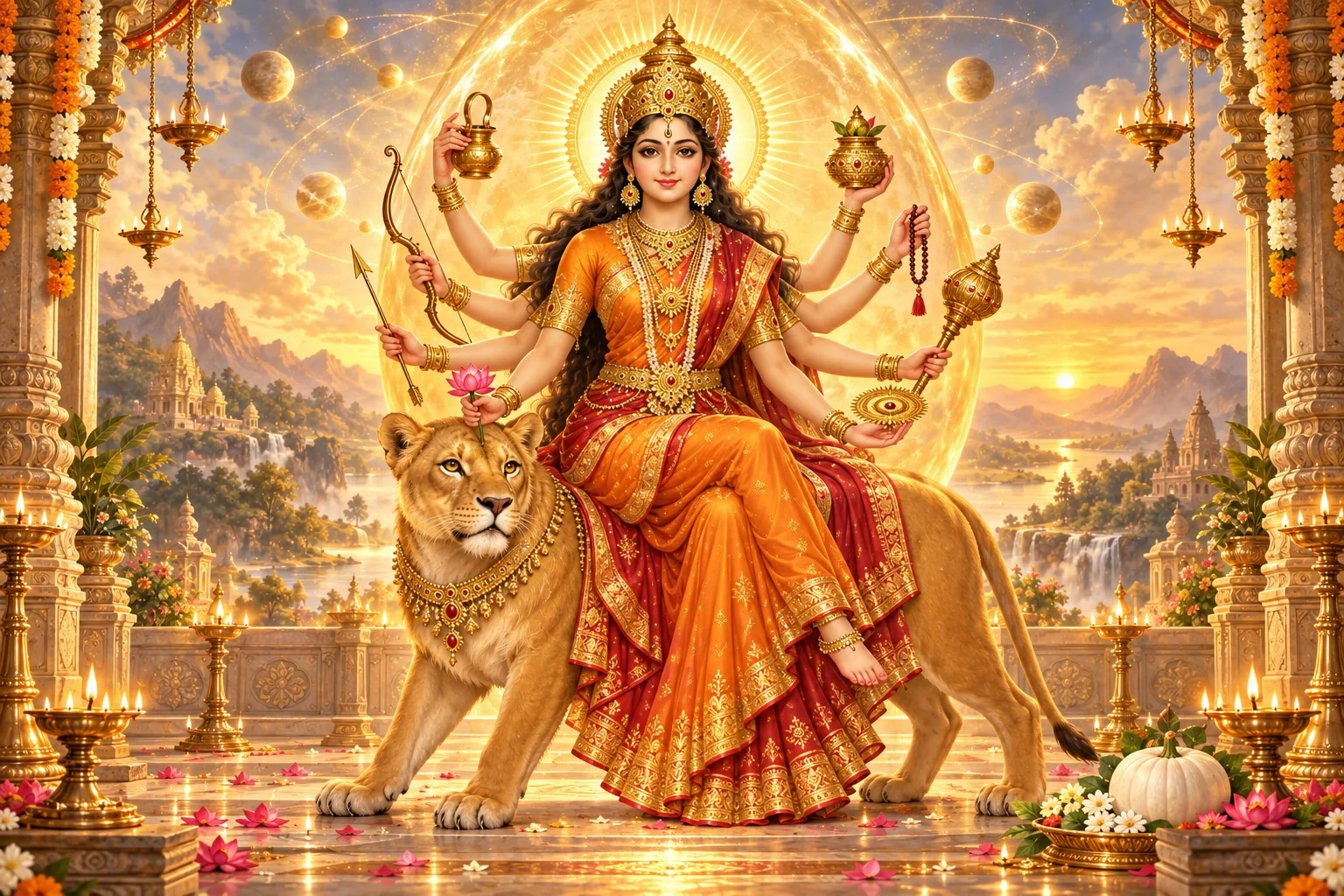
The Smile That Made the Universe
The fourth day of Navratri makes the festival's largest claim. Before the worlds existed — before light itself — the Adi Shakti, tradition says, smiled. And in the flash of that soft laugh (ishat hasya), the brahmanda — the cosmic egg, the entire universe — came into being. The form who smiled it into existence is Maa Kushmanda, fourth of the Navdurga, worshipped in 2026 on Chaturthi — Wednesday, October 14.
The first three forms told a human-scale story: a daughter, an ascetic, a bride. With Kushmanda the lens pulls back to the absolute: this same Devi is the one in whom all stories, and their tellers, and the light they are told by, arise. It is the Navratri equivalent of looking up from a family album to the night sky.
Maa Kushmanda at a Glance
| Traditional order | 4th of the Navdurga |
| Tithi | Chaturthi (fourth lunar day) |
| 2026 worship date | Wednesday, October 14, 2026 (New Delhi, Drik Panchang convention) |
| Vahana | Lioness |
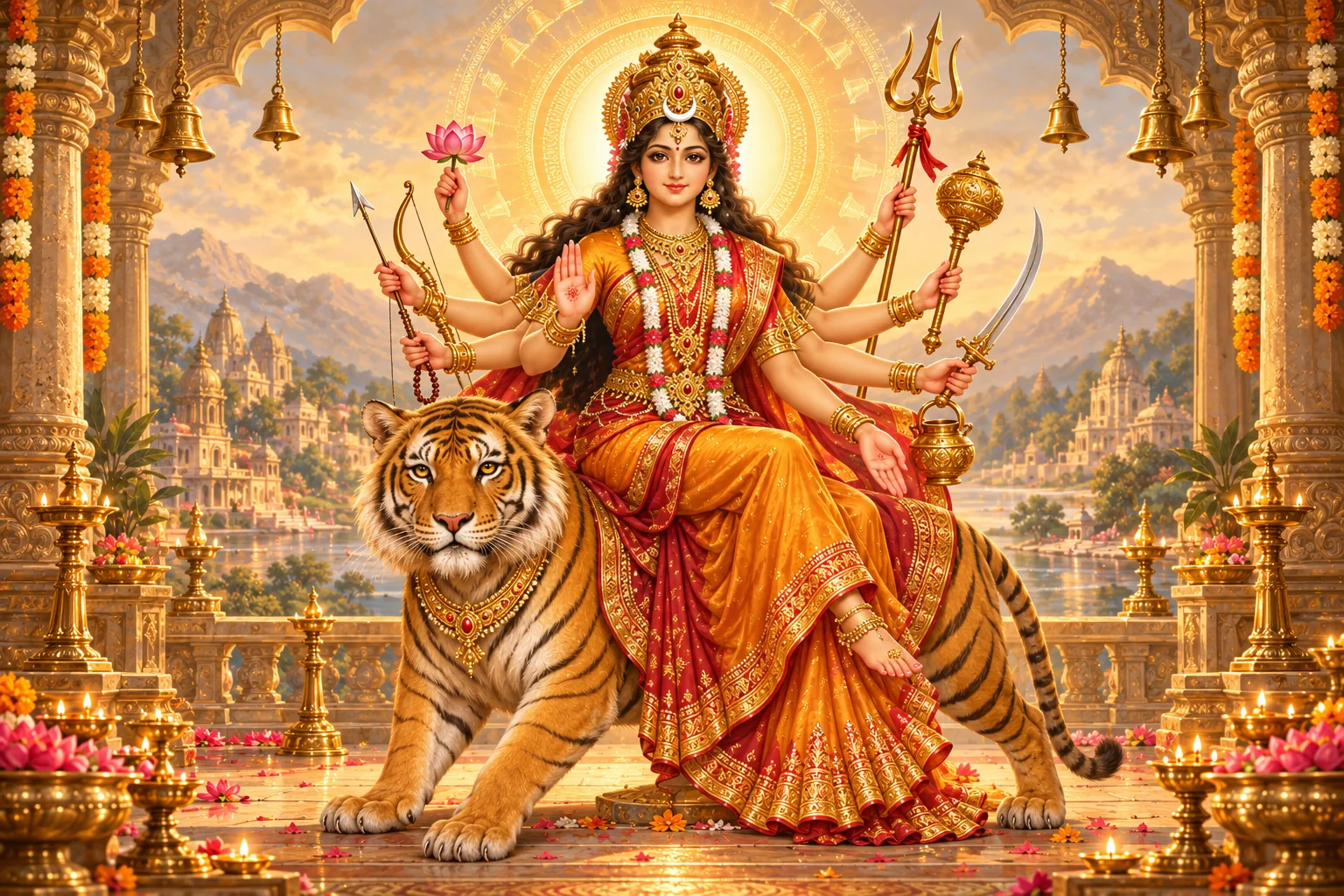
| Iconography | Eight arms (Ashtabhuja) — kamandal, bow, arrow and lotus; amrit kalash, japa mala, gada and chakra |
| Governing celestial body | Surya (the Sun) |
| Traditional bhog | Malpua; also the ash gourd (petha) |
| Flower | Red flowers |
| Day colour (popular custom) | Royal blue in 2026 — a weekday-based custom, not a scriptural rule |
The verified 2026 calendar for all nine forms is on the series landing page.
The Name: Three Small Syllables, One Cosmos
The traditional etymology reads Ku-ushma-anda as "she whose slight (ku) warmth (ushma) produced the egg (anda)" — the cosmic egg of Vedic and Puranic cosmology, the brahmanda from which all worlds unfold. The claim hiding in the grammar is tender: creation was not a labour for her. It cost the Devi no more than a smile costs a mother.
The word carries a second, earthier meaning: kushmanda is Sanskrit for the white pumpkin — the ash gourd (petha). Tradition holds the vegetable dear to her and makes it her characteristic offering; the sweet-makers of Agra would add that the Devi has excellent taste. The two meanings touch: the goddess of the cosmic egg accepts, with equal grace, a gourd from a devotee's garden. Nothing is too vast for her; nothing too humble.
Her Story: Light Before the Sun
Kushmanda's account, as carried by the Navdurga tradition and echoed in the Devi Bhagavata's vision of the Devi as supreme creator, runs like this:
When there was no creation — no sun, no worlds, only directionless dark — the Adi Shakti manifested in this form and smiled the brahmanda into being. Then, so that the new creation would not freeze back into darkness, she made her dwelling in the core of the Sun itself — the only being, tradition says, with the power to live there. Her body's glow is what we see as sunlight; she gives Surya his heat, his direction, his steadiness.
Provenance note: this is cosmological katha, not a single dateable chapter — the Navdurga tradition's way of saying what the Devi Mahatmya says in doctrine: that the Devi is Jagaddhatri, the bearer of the world, prior to all forms including the gods'. Treat the narrative as the tradition's poetry for a truth it holds philosophically. For the trimurti's relationship to the one absolute, our article on the eternal trinity of Hinduism gives the fuller map.
Iconography: Eight Arms Holding a Universe
Maa Kushmanda rides a lioness and is called Ashtabhuja Devi — the eight-armed. Her hands hold, in the traditional description: kamandal, dhanush (bow), bana (arrow) and lotus on the right; amrit kalash (the nectar pot), japa mala, gada and chakra on the left. The japa mala, tradition adds, holds within it the power to bestow all the siddhis and niddhis — all attainments and treasures.
Read the set as a whole: weapons for protection, nectar for nourishment, the rosary for grace — a creator's full toolkit. Her radiance is described as the Sun's own; her governing celestial body is, fittingly, Surya.
How to Worship Maa Kushmanda at Home
- Morning worship at the kalash — lamp, incense, water offering, as every day.
- Offer red flowers, roli and akshat.
- Offer bhog of malpua, and where available, petha or dishes of ash gourd — her namesake offering. (Families sometimes offer a whole small ash gourd and later cook it as prasada.)
- Face the morning sun for a few quiet moments — devotees traditionally remember her with Surya, offering water (arghya) at sunrise.
- Chant her mantra (below), 108 times or as attention allows.
- Evening aarti with the family.
For the basics of lamps, offerings and aarti, browse our Practices & Rituals section.
Mantra, Prarthana and Meaning
Mantra
ॐ देवी कूष्माण्डायै नमः॥
Om Devi Kushmandayai Namah — "Om, salutations to Devi Kushmanda."
Prarthana (as given in the Navdurga tradition):
सुरासम्पूर्ण कलशं रुधिराप्लुतमेव च। दधाना हस्तपद्माभ्यां कूष्माण्डा शुभदास्तु मे॥
Surasampurna Kalasham Rudhiraplutameva Cha, Dadhana Hastapadmabhyam Kushmanda Shubhadastu Me.
"May Kushmanda, who holds in her lotus hands the kalash brimming with nectar, be the giver of auspiciousness to me."
Offerings, Flowers and the Day's Colour
- Bhog: malpua — the soft, ghee-fried sweet — is the classic fourth-day offering, which tradition links to clarity of intellect. The ash gourd (petha) is her namesake offering; in parts of North India, petha sweets stand in beautifully.
- Flowers: red flowers are held dear to her.
- Colour: the popular calendar assigns royal blue to October 14, 2026 — again, a cherished weekday-based custom rather than scripture.
A Reflection for Chaturthi
Kushmanda's teaching is about the economy of joy: what you create, you create best from lightness. The universe, the tradition insists, was not wrung out of anxiety; it was smiled into being. Most of us build our days the other way — grimly, as though effort only counts when it hurts. The fourth day asks: what would your work look like if you made it the way she made the world — generously, radiantly, almost playfully?
On the vrat: mid-festival fatigue is real. If your energy is flagging, adjust the fast rather than abandoning the bhava — fruit, milk, water in the sun's warmth. The Devi who lives in the Sun does not ask her devotees to run out of light.
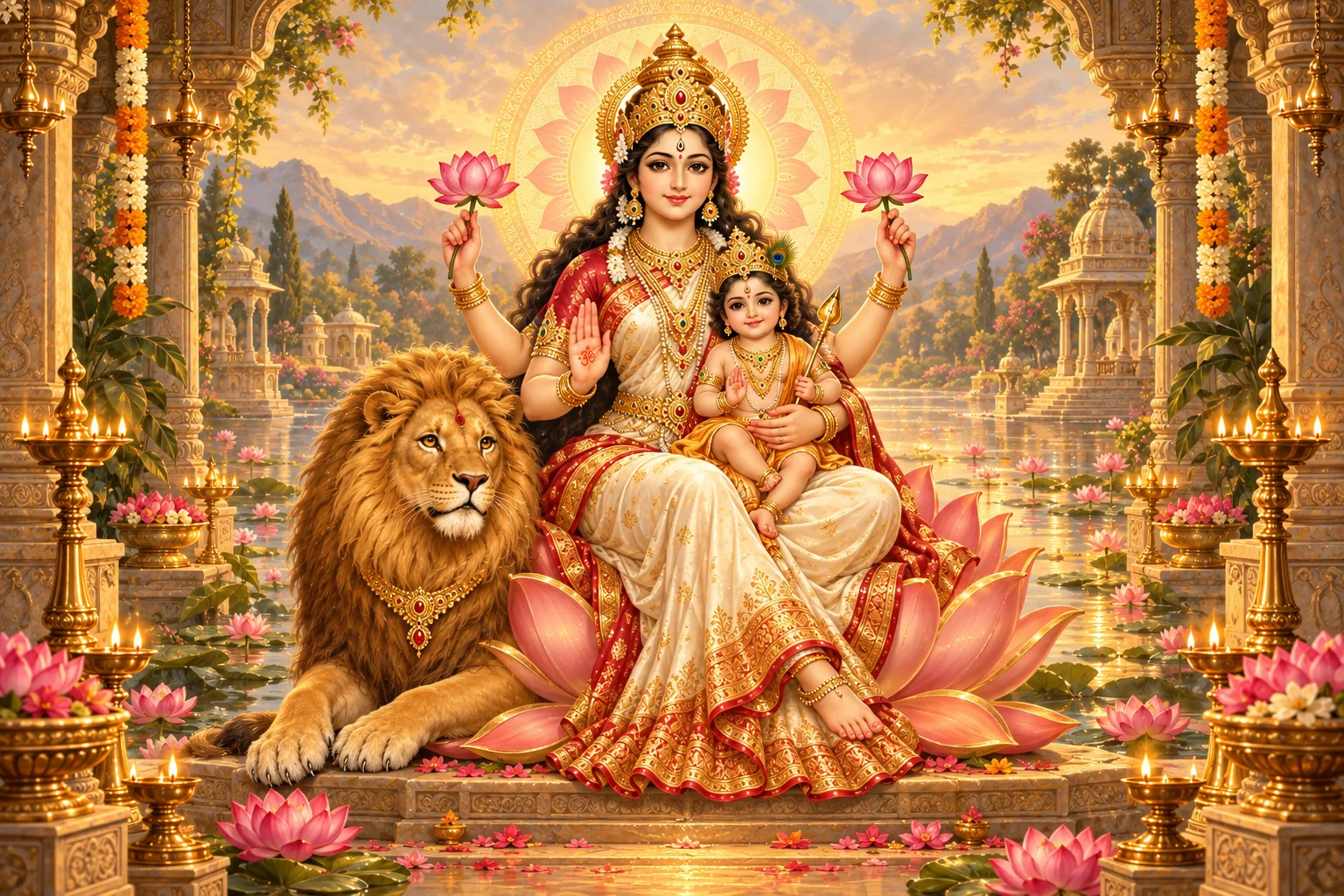
Tomorrow the cosmic creator becomes, of all things, a mother with a child in her lap — Maa Skandamata, the fifth form. The whole series lives at Navratri: Nine Forms of Maa Durga.
References
- Drik Panchang — Goddess Kushmanda: iconography, mantra, the Sun association and the smile-creation account.
- Drik Panchang — 2026 Shardiya Navratri Calendar (New Delhi): verified dates.
- Drik Panchang — Navratri Prasad: the nine-day bhog tradition (malpua on day 4).
- Durga Saptashati with Devi Kavacham (Gita Press, Gorakhpur) — "Kushmandeti chaturthakam" in the Navdurga enumeration; Devi Bhagavata tradition for the Devi-as-creator doctrine.
Frequently Asked Questions
When is Maa Kushmanda worshipped in Navratri 2026?
Maa Kushmanda is worshipped on Chaturthi, the fourth tithi of Shardiya Navratri — Wednesday, October 14, 2026 (New Delhi, Drik Panchang convention). Tithi timings vary by city, so confirm with your local panchang.
What is Maa Kushmanda's mantra?
Her simple mantra is 'Om Devi Kushmandayai Namah' (ॐ देवी कूष्माण्डायै नमः). The traditional prarthana is 'Surasampurna Kalasham Rudhiraplutameva Cha, Dadhana Hastapadmabhyam Kushmanda Shubhadastu Me' — may Kushmanda, holding in her lotus hands the nectar-filled kalash, grant me auspiciousness.
What does the name Kushmanda mean?
The traditional reading joins ku (little), ushma (warmth or cosmic energy) and anda (egg): she who produced the cosmic egg — the brahmanda — with a flash of her smile. Kushmanda is also the Sanskrit word for the white pumpkin (ash gourd, petha), which tradition regards as her favoured offering.
What bhog is offered to Maa Kushmanda?
Malpua — soft, ghee-fried sweet pancakes — is the traditional fourth-day bhog, associated with sharpened intellect and decision-making. The ash gourd (kushmanda/petha), including sweets made from it, is also offered in many regions. Red flowers are held dear to her.
Why is Maa Kushmanda associated with the Sun?
Tradition says she alone has the power to dwell in the Sun's core — her radiance is the Sun's radiance, and she gives Surya his direction and energy. She is therefore held to govern the Sun (Surya) among the heavenly bodies.