The Lord Before Whom Even Time Must Bow
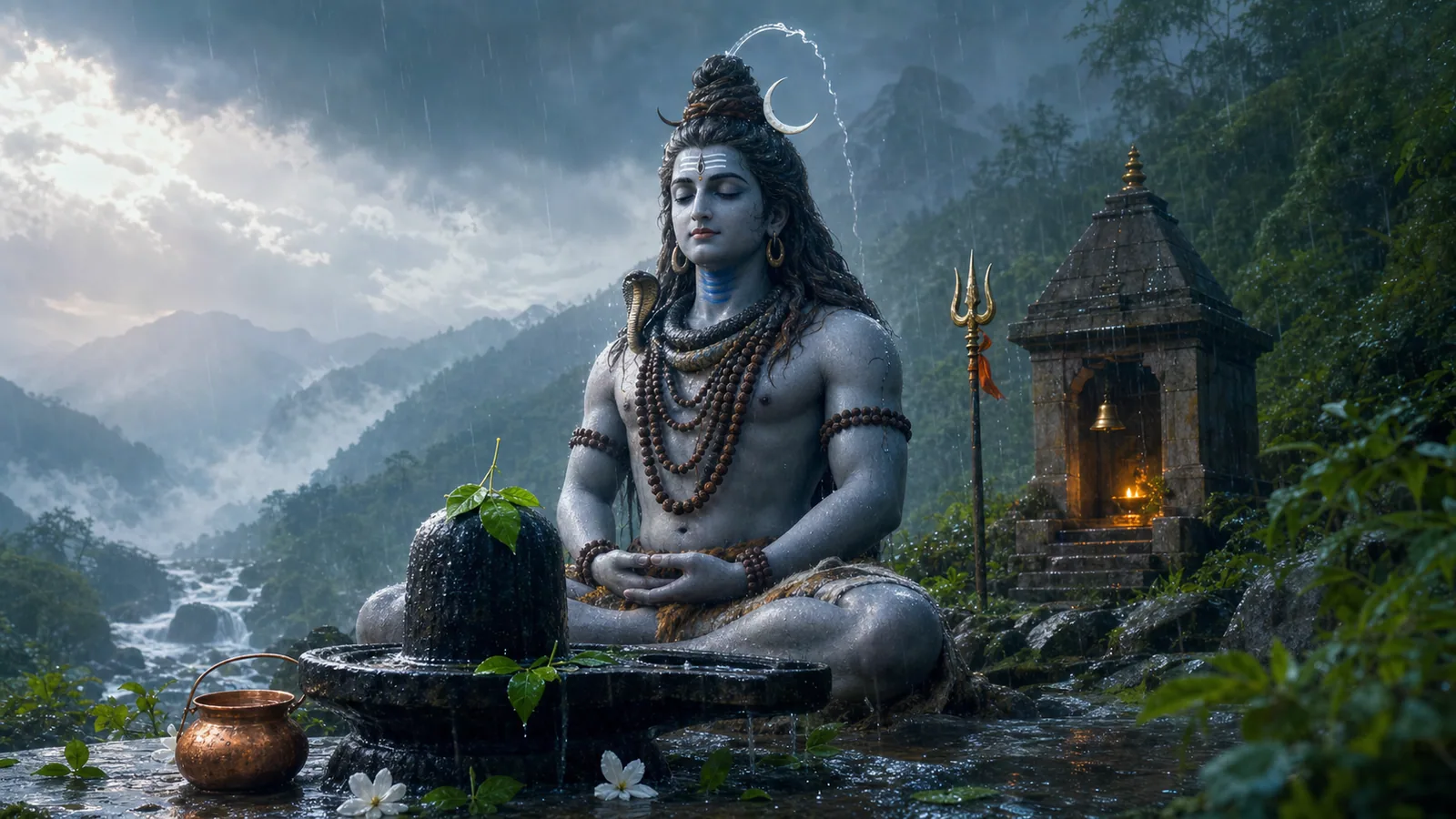
In the ancient city of Ujjain, on the banks of the sacred Shipra River, stands a shrine to the one power that even the gods cannot escape — time itself. This is Mahakaleshwar, where Bhagwan Shiva is worshipped as Mahakal, the Lord of Time and Death. Kala is time — the silent force that carries every being, every empire, every star toward its end. And Shiva here is Maha-kala, the Great Time, who devours even death and stands beyond the very current that sweeps the rest of creation away.
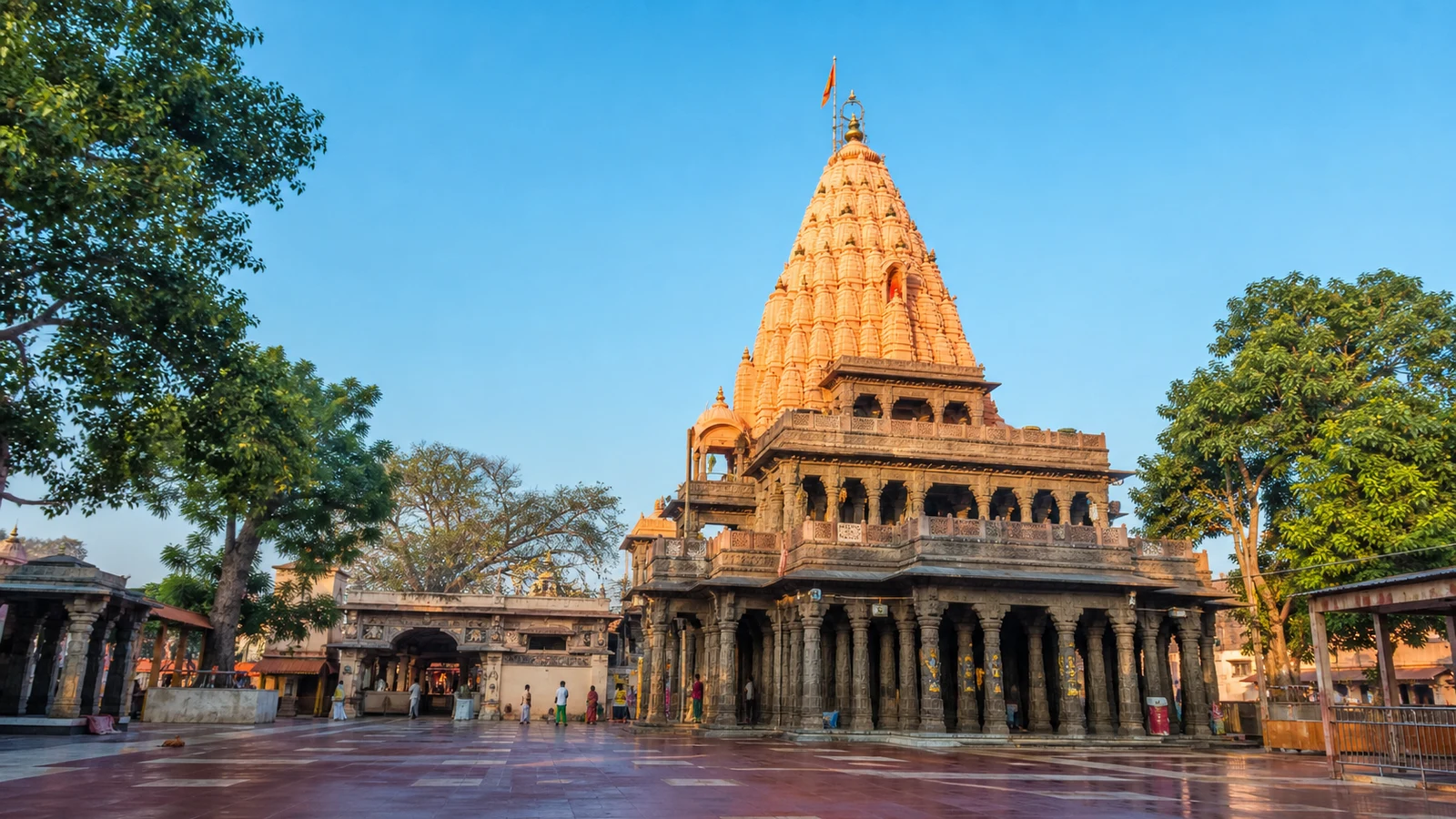
To stand before the Mahakaleshwar Jyotirlinga is to stand before that truth without flinching. Ujjain has watched centuries rise and fall — kings, poets, and astronomers come and go — and through it all Mahakal has remained. This is not merely another temple in Madhya Pradesh. It is the throne of the eternal, the third of the twelve supreme abodes of Shiva, and the beating heart of one of the holiest cities in the Sanatan world.
This is the story of why the Mahakaleshwar Temple matters — spiritually, historically, and eternally.
Mahakaleshwar Jyotirlinga at a Glance
For readers planning a pilgrimage, here are the essential facts about Mahakaleshwar Jyotirlinga:
| Detail | Information |
|---|---|
| Temple | Shree Mahakaleshwar Jyotirlinga Temple (Mahakal Mandir) |
| Deity | Bhagwan Shiva as Mahakal, the Lord of Time and Death |
| Spiritual status | Third of the 12 Jyotirlingas; a swayambhu, south-facing Jyotirlinga |
| Location | Ujjain (ancient Avantika), on the Shipra River, Madhya Pradesh |
| Sacred river | Shipra (Kshipra) River |
| Best known for | The Bhasma Aarti, Mahakal's rulership of Ujjain, and the Simhastha Kumbh |
| Nearby places | Ram Ghat, Kal Bhairav, Harsiddhi Mata, Sandipani Ashram, Bade Ganeshji, Chintaman Ganesh, Mahakal Lok |
The Meaning of "Mahakaleshwar": The Great Lord of Time
The name Mahakaleshwar is woven from three words. Maha means great. Kala carries a double meaning that lies at the very centre of this shrine — it means both time and death, for in the Sanatan vision the two are one: it is the passage of time that brings all things to their end. Ishwara means Lord. Together, Mahakaleshwar is "the Great Lord of Time," and Shiva here is lovingly called Mahakal.
There is a profound teaching hidden in this name. Kala — time, death — is the one force no creature can defeat. Yet Shiva is Mahakala, its master: where all beings are subject to time, Mahakal is the Lord of time; where death claims everything, he wears the ash of the funeral pyre and remains untouched. To worship at Ujjain is to lay one's mortality at the feet of the only power greater than it.
To understand how the Lord of Time came to dwell in Ujjain, we must turn to a story preserved in the Puranas.
The Story of Mahakaleshwar and the Demon Dushana
The Mahakaleshwar story is told in the Shiva Purana and cherished across the tradition.
In ancient times, the city of Avantika — the old name for Ujjain — was a seat of learning and devotion, radiant with the recitation of the Vedas. There lived a pious Brahmin, a devoted worshipper of Shiva, who kept the sacred fires and daily worship alive with his sons, while Shiva bhakti flowed through the whole city like the Shipra itself.
But not far away dwelt a fearsome demon named Dushana. Strengthened by a boon that made him almost impossible to conquer, he set out to destroy dharma at its root — tormenting the people of Avantika, forbidding the worship of the gods, and seeking to silence the Vedas altogether. The devotees, unwilling to abandon their Lord, took refuge in Shiva alone, pouring their hearts into prayer.
When the demon's cruelty reached its peak and he moved to strike down the faithful, the earth itself split open. From the ground rose Shiva in his most terrifying and magnificent form — Mahakala, blazing like the fire at the end of an age. The Puranas say that with a single roar he reduced the demon and his forces to ash, ending the reign of terror in an instant.
The grateful devotees fell at his feet and begged him not to leave — to remain in Avantika forever and guard them from all fear. Moved by their love, Shiva agreed, establishing himself in the city as the Mahakaleshwar Jyotirlinga. From that day Ujjain has lived under the protection of its eternal Lord — for Mahakal is not a guest in Ujjain but its true and only king, the sovereign who never leaves.
Why Mahakaleshwar Is Special Among the 12 Jyotirlingas
A Jyotirlinga is a place where Shiva is worshipped not as a carved image but as a jyoti — a self-manifest pillar of light and consciousness, beyond form. Across Bharat there are twelve such supreme shrines, and pilgrims traditionally undertake the Dwadasha Jyotirlinga Yatra to visit them all. You can follow the whole journey through our 12 Jyotirlingas series, one sacred abode each week.
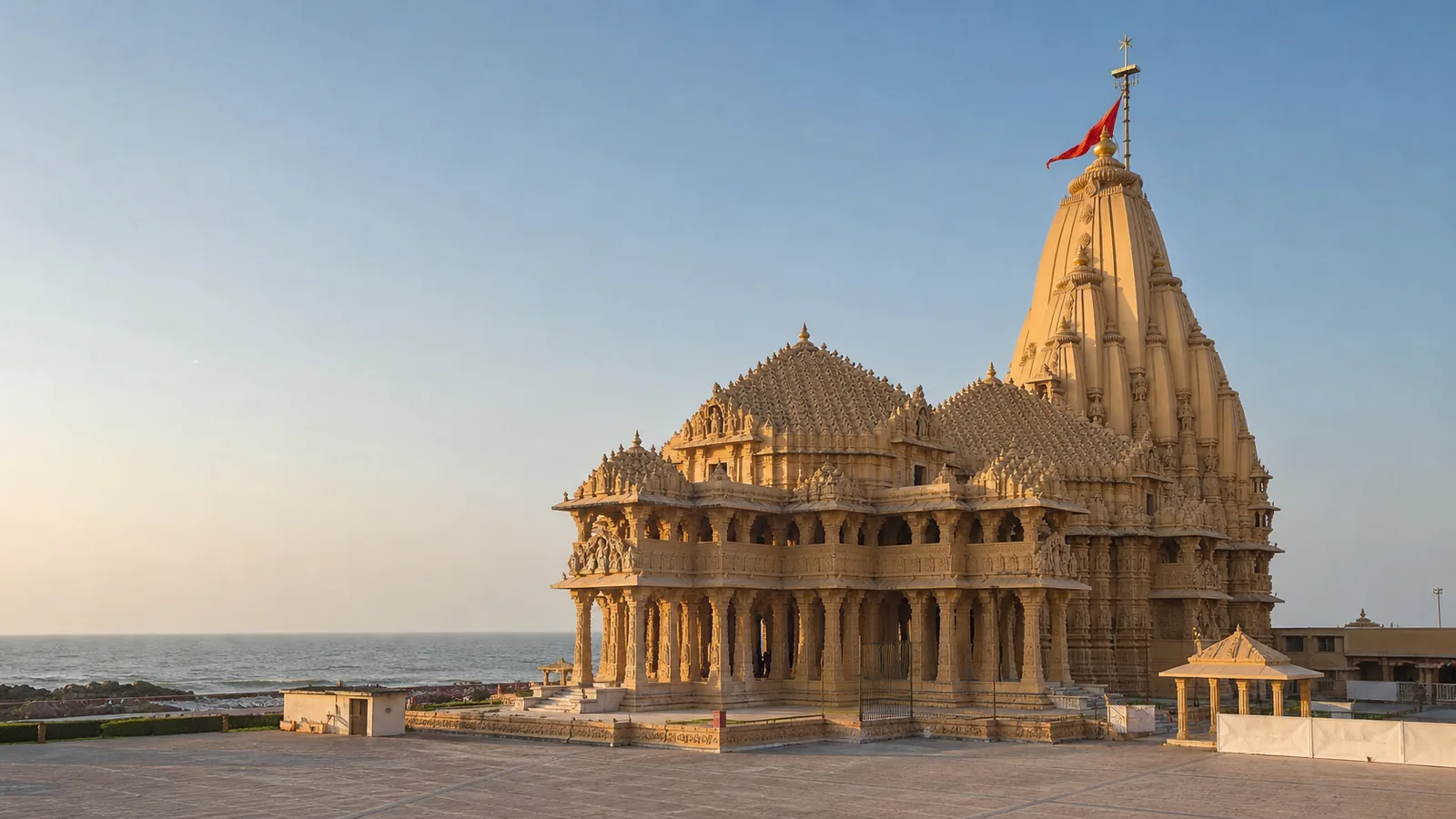
In the traditional order recited in the Dwadasha Jyotirlinga Stotra, Mahakaleshwar at Ujjain is named third — "Ujjayinyam Mahakalam" — coming after Somnath on the coast of Gujarat and Mallikarjuna in the Nallamala hills. For a pilgrim moving through the twelve, Ujjain is where the journey turns to the very mystery of time.
Several things set the Mahakal temple apart:
- It is swayambhu. The Mahakaleshwar lingam is honoured as self-manifest — not installed by human hands but arisen of its own power, one of the marks of a true Jyotirlinga.
- It is south-facing. Almost every shrine faces east, toward the rising sun; Mahakaleshwar is famously dakshinamukhi — facing south, the direction of Yama, lord of death. This rare orientation is considered deeply significant, associated with tantric worship, and perfectly fitting for the Lord of Time and Death.
- It is the Jyotirlinga of Bhasma Aarti. Mahakaleshwar is renowned for its daily pre-dawn worship with sacred ash — the ritual most closely bound to Mahakal's nature.
- Mahakal is the ruler of Ujjain. By long tradition he is the reigning sovereign of the city, and popular belief holds that no other king should spend the night within Ujjain's old limits, for the city already has its eternal ruler.
The Bhasma Aarti: Worship with Sacred Ash
No ritual captures the spirit of Mahakal like the Bhasma Aarti Ujjain is famous for. In the stillness before dawn, when the city is asleep, the temple awakens for the first and most powerful worship of the day. The Jyotirlinga is bathed and then adorned with bhasma — sacred ash — to the sound of drums, conches, and the thunder of Om Namah Shivaya rising in the dark.
The ash is the deepest of symbols — what remains when everything else has burned away, a reminder that all forms, all wealth, all bodies return at last to ash, and that only the eternal endures. Shiva, the ascetic who smears himself with the ash of the cremation ground, wears our mortality upon his own body and makes it holy. To witness Mahakal covered in bhasma at daybreak is to feel, in the marrow, both the finality of death and the presence of that which death cannot touch.
Devotees travel from across Bharat for this darshan, which usually requires advance booking and follows dress-code and identity rules administered carefully by the temple.
A note of reverence: Bhasma Aarti timings, booking procedures, and entry rules change from time to time and during festivals. Please confirm the latest arrangements through the official Mahakaleshwar temple website before planning your visit, rather than relying on unofficial sources.
Temple History and the Sacred Importance of Ujjain
To understand Mahakaleshwar, one must understand Ujjain. Few cities in Bharat carry such a weight of sanctity. Known in the old texts as Ujjayini and Avantika, it is counted among the Sapta Puri — the seven holy cities said to grant liberation. It was the capital of legendary kings, the city of Vikramaditya, the home of the poet Kalidasa, and for centuries a great centre of learning, devotion, and the arts.
Above all, Ujjain was the city of time and astronomy. In classical Indian astronomy, the prime meridian — the line from which time and the calendar were reckoned — was drawn through Ujjain, and the Tropic of Cancer passes close by. Here scholars charted the sun and stars and set the rhythm of the panchang for the land. It is no accident that the Lord of Time chose to dwell in the very city that measured time — a truth to which the old Vedh Shala observatory still bears quiet witness.
The temple is woven through the long history of the city. Poets such as Kalidasa sang of Mahakal's shrine, and generations of rulers honoured it. Like many great temples, it suffered destruction during the turbulent centuries of invasion — the shrine was damaged in the thirteenth century — and, like Somnath, it rose again through the faith of those who would not let its light go out. The structure that stands today owes much to its restoration in the eighteenth century under the Marathas, and in recent years the vast Mahakal Lok corridor has risen around it, lined with sculptures narrating the legends of Shiva.
Mahakaleshwar Darshan and the Pilgrimage Experience
A Mahakaleshwar darshan is best taken slowly. Many pilgrims first go to the Shipra River for a bath or prayer, purifying themselves before entering the presence of Mahakal. Within its sanctum the Jyotirlinga sits in a deep chamber, facing south, worshipped in unbroken ritual.
The shrine is arranged over more than one level. In the lower sanctum resides Mahakaleshwar himself; above is the shrine of Omkareshwar, and higher still that of Nagchandreshwar, which by tradition opens only once a year, on Nagpanchami. The day of worship begins with the pre-dawn Bhasma Aarti and moves through successive pujas and aartis, from the awe of the dark morning to the gathering peace of evening.
The most stirring time comes in the holy month of Shravan, when the Sawari of Mahakal — the royal procession — winds through the streets of Ujjain, carrying the Lord out among his people toward the Shipra. Vast crowds gather, and the whole city becomes a single act of devotion.
A practical note of reverence: only the temple priests perform the close rituals upon the Jyotirlinga. Devotees have darshan from the designated areas, as is proper before a self-manifest form of the Divine, and should follow the directions of the priests and temple staff.
Sacred Places Near the Mahakaleshwar Temple
A pilgrimage to Mahakal opens naturally into the wider sacred landscape of Ujjain. These are the most cherished places near Mahakaleshwar temple:
Ram Ghat — The most beloved ghat on the Shipra River, where the evening aarti is offered and, once every twelve years, the great Simhastha Kumbh bath takes place. A dip here traditionally begins the Ujjain pilgrimage.
Kal Bhairav Temple — The shrine of Bhairav, the fierce guardian deity who watches over the city on Mahakal's behalf. It is famous for an unusual offering — devotees present liquor to the deity — a practice rooted in the region's Tantric traditions.
Harsiddhi Mata Temple — A revered temple of the Goddess, counted among the Shakti Peethas, glowing at Navratri with its towering lamp-pillars (deep stambh). Shiva and Shakti are thus honoured together within the same sacred city.
Sandipani Ashram — The hermitage where, by cherished tradition, Bhagwan Shree Krishna, Balarama, and Sudama studied under the sage Sandipani — making Ujjain dear to devotees of Krishna as well as Shiva.
Bade Ganeshji ka Mandir — Near the Mahakal temple, this shrine of a large and majestic Ganesha idol is a natural first stop, as Ganesha is honoured before every undertaking.
Chintaman Ganesh — An ancient temple of Ganesha as the reliever of worries (chinta), where pilgrims come to lay down their anxieties before the Lord.
Mahakal Lok — The grand corridor around the temple, its walkway lined with statues and murals telling the stories of Shiva — a moving way to enter Mahakal's world before darshan.
How to Reach Ujjain
By air: The nearest major airport is Indore (Devi Ahilyabai Holkar Airport), roughly 55 km away, connected to major cities across Bharat. Taxis and buses run onward to Ujjain.
By train: Ujjain Junction lies in the heart of the city, only a short distance from the temple, and is well connected by rail to Indore, Bhopal, and many other cities — a convenient railhead for most pilgrims.
By road: Ujjain is well linked to Indore, Bhopal, and the wider region, with regular buses, taxis, and private vehicles serving the city.
Best Time to Visit Mahakaleshwar
The winter months, roughly October to March, offer the most pleasant weather for a visit to Ujjain. The most spiritually charged — and most crowded — times are Mahashivratri, the holy month of Shravan with its famous Monday Sawaris, and the Simhastha Kumbh, the great gathering held on the banks of the Shipra once every twelve years. For a quieter Mahakaleshwar darshan, weekday mornings outside the festival season are ideal. Whenever you go, allow time for the Bhasma Aarti (subject to booking), the river, and the temples of the old city — Ujjain rewards those who linger.
What Mahakaleshwar Teaches Us Today
Among all the Ujjain temple shrines and indeed among all the great Jyotirlingas, Mahakaleshwar holds a teaching that touches every human life, whether we are ready for it or not.
Mahakal is the Lord of Time and Death — the two truths we spend our lives trying to forget. The bhasma at dawn says plainly what we would rather not hear: that everything we grasp will one day be ash. Yet this is not a teaching of despair, for standing at the centre of that ash, unshaken, is Shiva himself — Mahakala, the master of the very force we fear. To lay our mortality at his feet is to discover that the part of us which fears death is not the whole of us; that behind the passing of time there is something, in us and in all things, that time cannot touch.
Ujjain, the city that once measured time for a civilization, enshrines this deepest of lessons. To visit Mahakaleshwar is to be gently reminded that our days are numbered and precious — and that the way to live them without fear is to remember the eternal Lord who stands beyond them all.
Om Namah Shivaya.
Frequently Asked Questions
Where is the Mahakaleshwar Jyotirlinga located?
In Ujjain (ancient Avantika), on the banks of the Shipra River, in Madhya Pradesh. The Mahakal temple stands in the heart of the old city.
Which number Jyotirlinga is Mahakaleshwar among the 12?
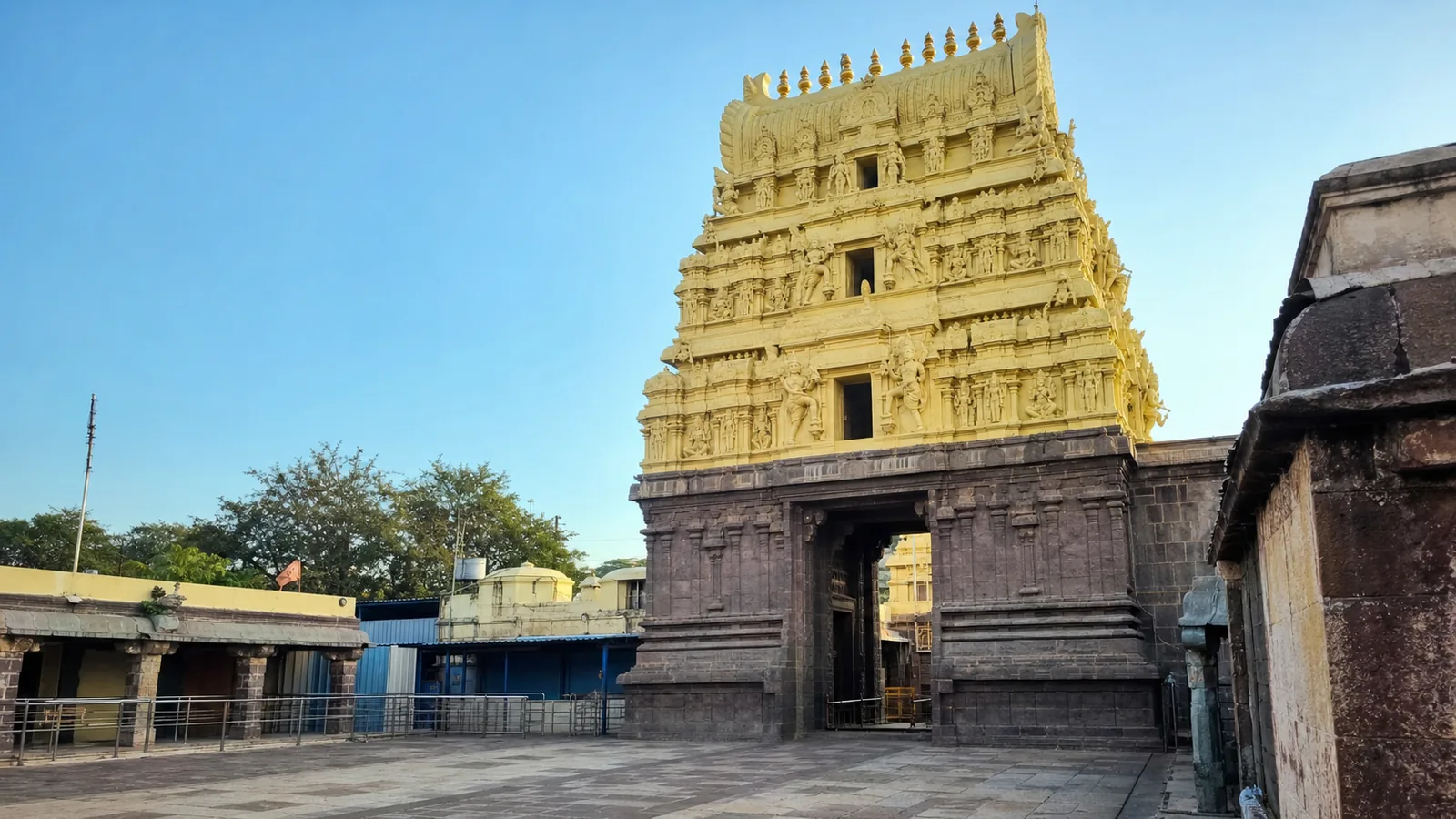
Mahakaleshwar is traditionally counted as the third of the 12 Jyotirlingas, after Somnath in Gujarat and Mallikarjuna at Srisailam — named as 'Ujjayinyam Mahakalam' in the Dwadasha Jyotirlinga Stotra.
What is the Bhasma Aarti at Mahakaleshwar?
It is the sacred pre-dawn aarti in which the Mahakal Jyotirlinga is worshipped with bhasma (holy ash). Mahakaleshwar is renowned as the Jyotirlinga of the daily Bhasma Aarti. Booking, timings and rules can change, so check the official temple guidance before your visit.
Why is Mahakaleshwar considered unique among the Jyotirlingas?
It is a swayambhu (self-manifest) Jyotirlinga, famously south-facing (dakshinamukhi), deeply associated with the daily Bhasma Aarti, and Mahakal is revered as the eternal ruler of Ujjain — the Lord of Time and Death.
What does the name Mahakaleshwar mean?
It combines Maha (great), Kala (time and death) and Ishwara (Lord) — 'the Great Lord of Time.' Shiva here is Mahakal, before whom even death and time itself must bow.
Why is Mahakaleshwar called a south-facing Jyotirlinga?
The Mahakal lingam faces south (dakshinamukhi), the direction of Yama, the lord of death. This orientation is rare and is considered spiritually significant, fitting for Shiva as the master of time and death.
How can I reach Ujjain and the Mahakaleshwar Temple?
The nearest railhead is Ujjain Junction, in the city itself, and the nearest major airport is Indore (about 55 km). Ujjain is also well connected by road from Indore, Bhopal and other cities.
What is the best time to visit Mahakaleshwar?
October to March offers the most pleasant weather. Mahashivratri, the month of Shravan (with the Mahakal Sawari processions) and the Simhastha Kumbh are especially auspicious but very crowded; weekday mornings are best for a peaceful darshan.
What places can I visit near the Mahakaleshwar Temple?
Ram Ghat on the Shipra, the Kal Bhairav Temple, Harsiddhi Mata Temple, Sandipani Ashram, Bade Ganeshji, Chintaman Ganesh and the Mahakal Lok corridor are the most visited sacred sites around Ujjain.
Do I need to book in advance for the Bhasma Aarti?
The Bhasma Aarti usually requires advance booking, along with dress-code and identity rules that can change from time to time. Always confirm the latest arrangements through the official Mahakaleshwar temple website before planning your darshan.